2026

Relay: A Companion Bead Bracelet for Aphasia
Entrant
Pratik Mistri, Jingya Chen
Category
Healthcare - Daily Living Aids
Client's Name
Country / Region:
United States
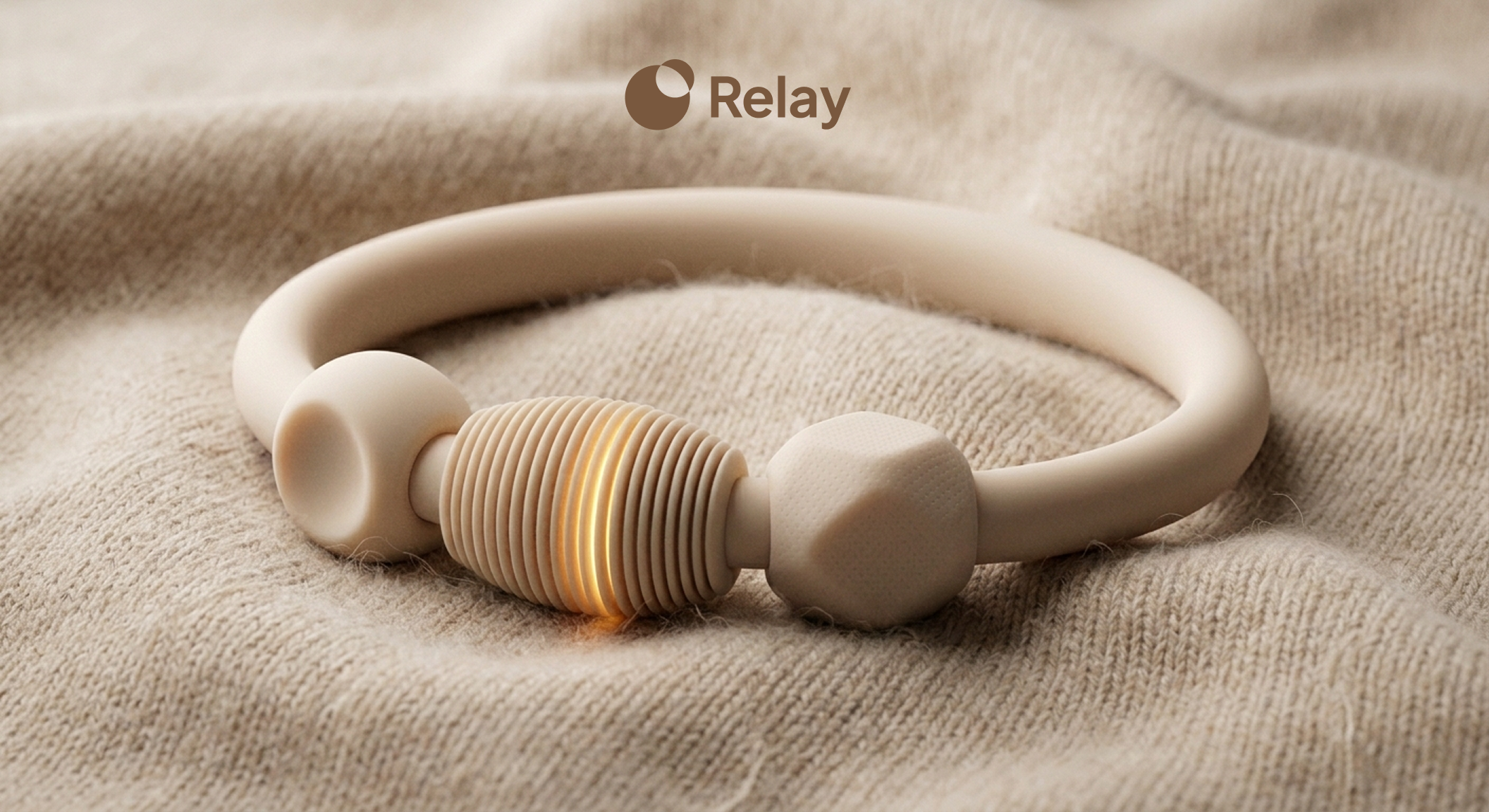
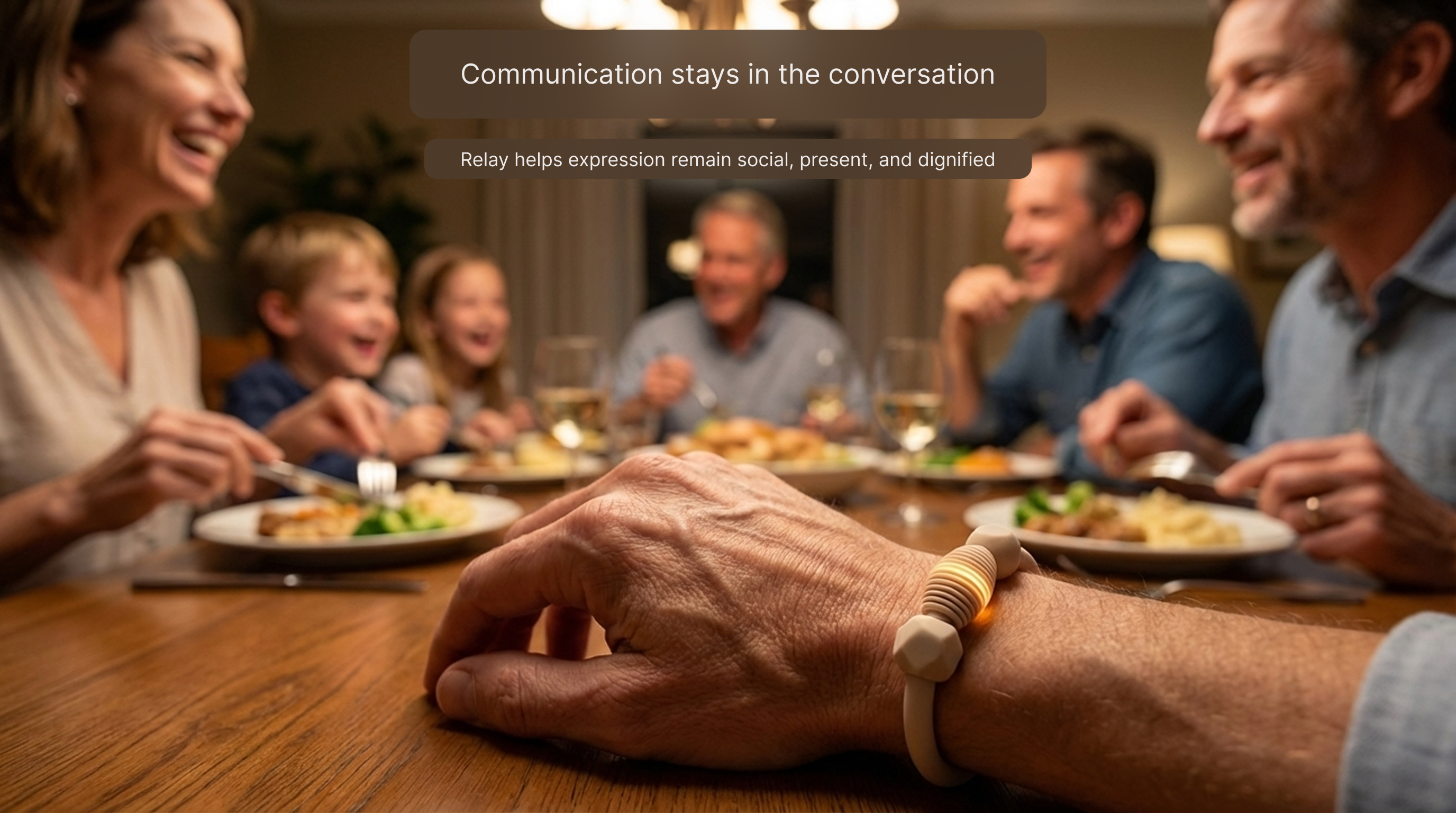
Relay is a tactile communication bracelet designed for people with aphasia—a condition often resulting from stroke or brain injury that impairs speech, reading, and writing. While existing Augmentative and Alternative Communication (AAC) tools are effective, they often rely on visually demanding screens and socially conspicuous interfaces. Relay proposes a different model: restoring communication through the body with dignity, discretion, and intuitive ease. By shifting from digital menus to physical landmarks, the device allows users to express essential phrases without interrupting the social flow of a conversation.
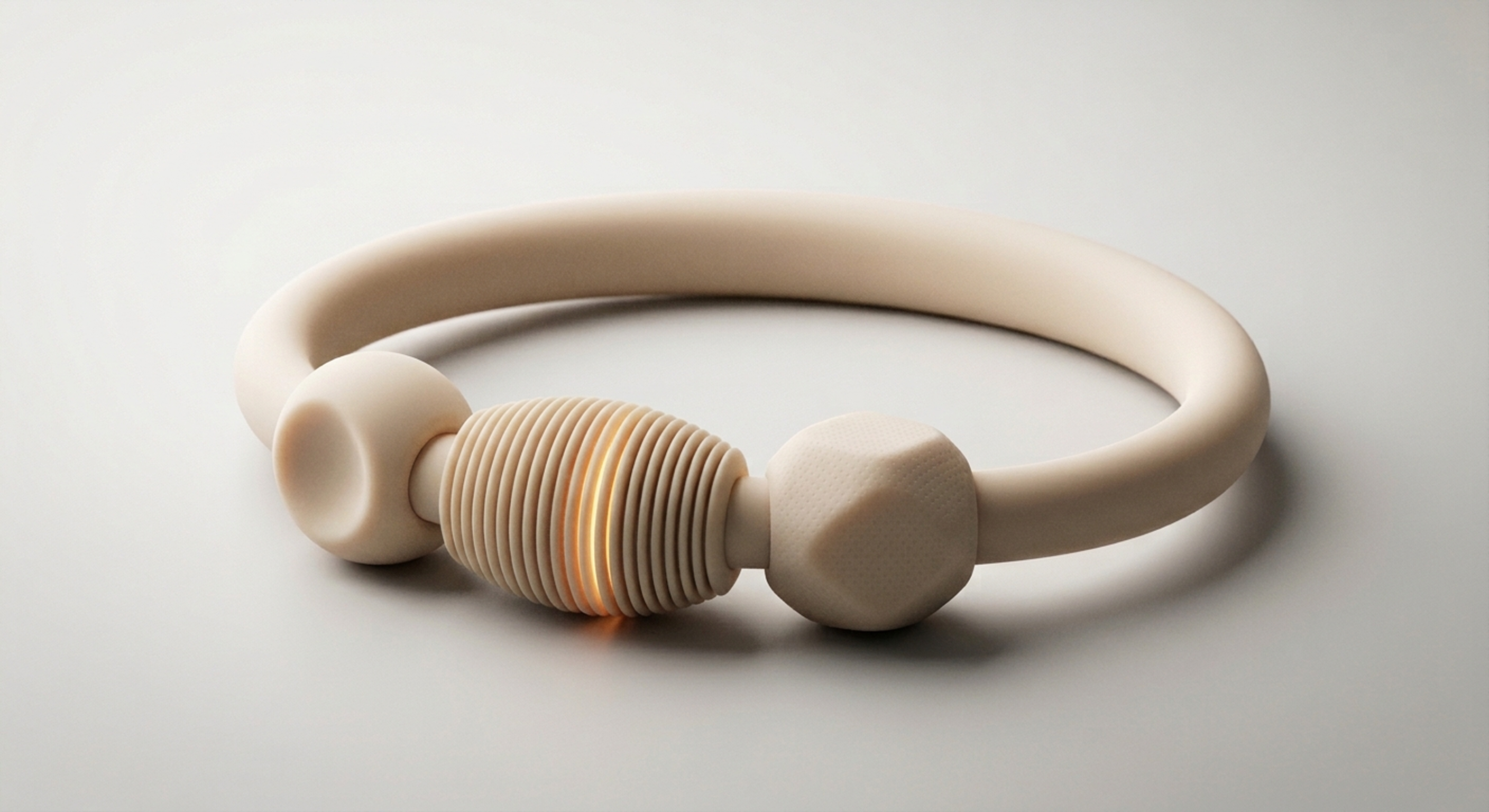
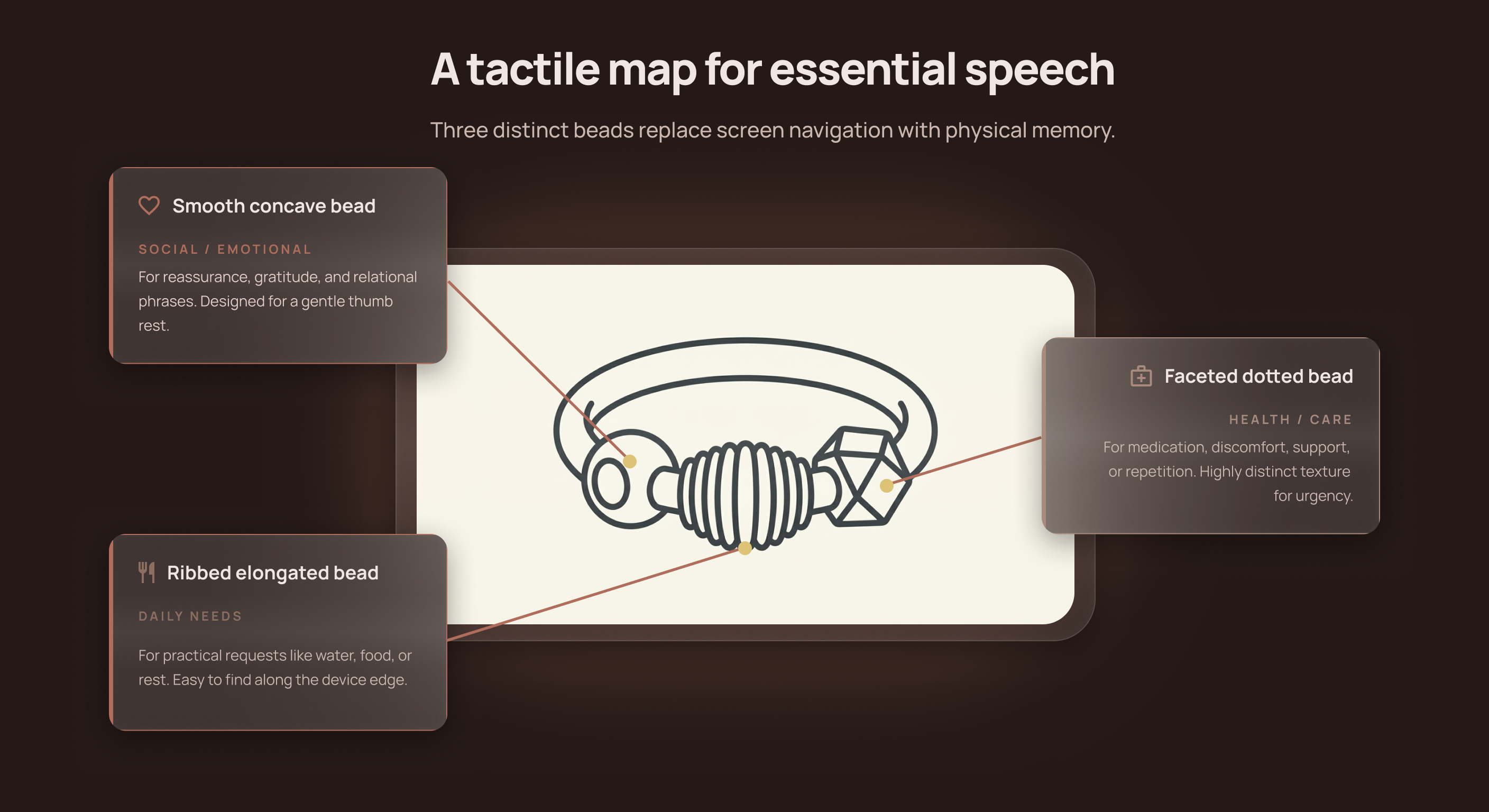
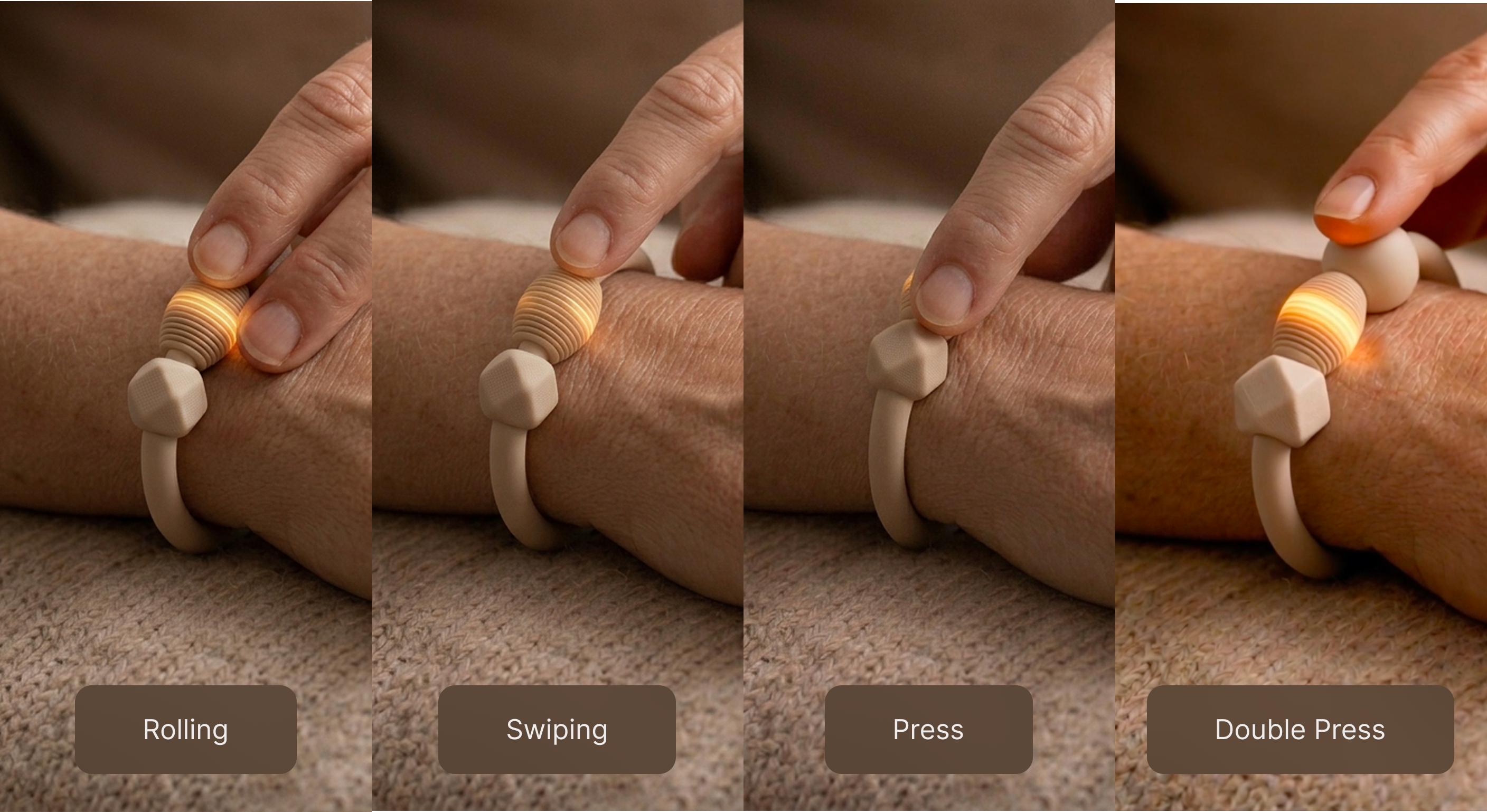
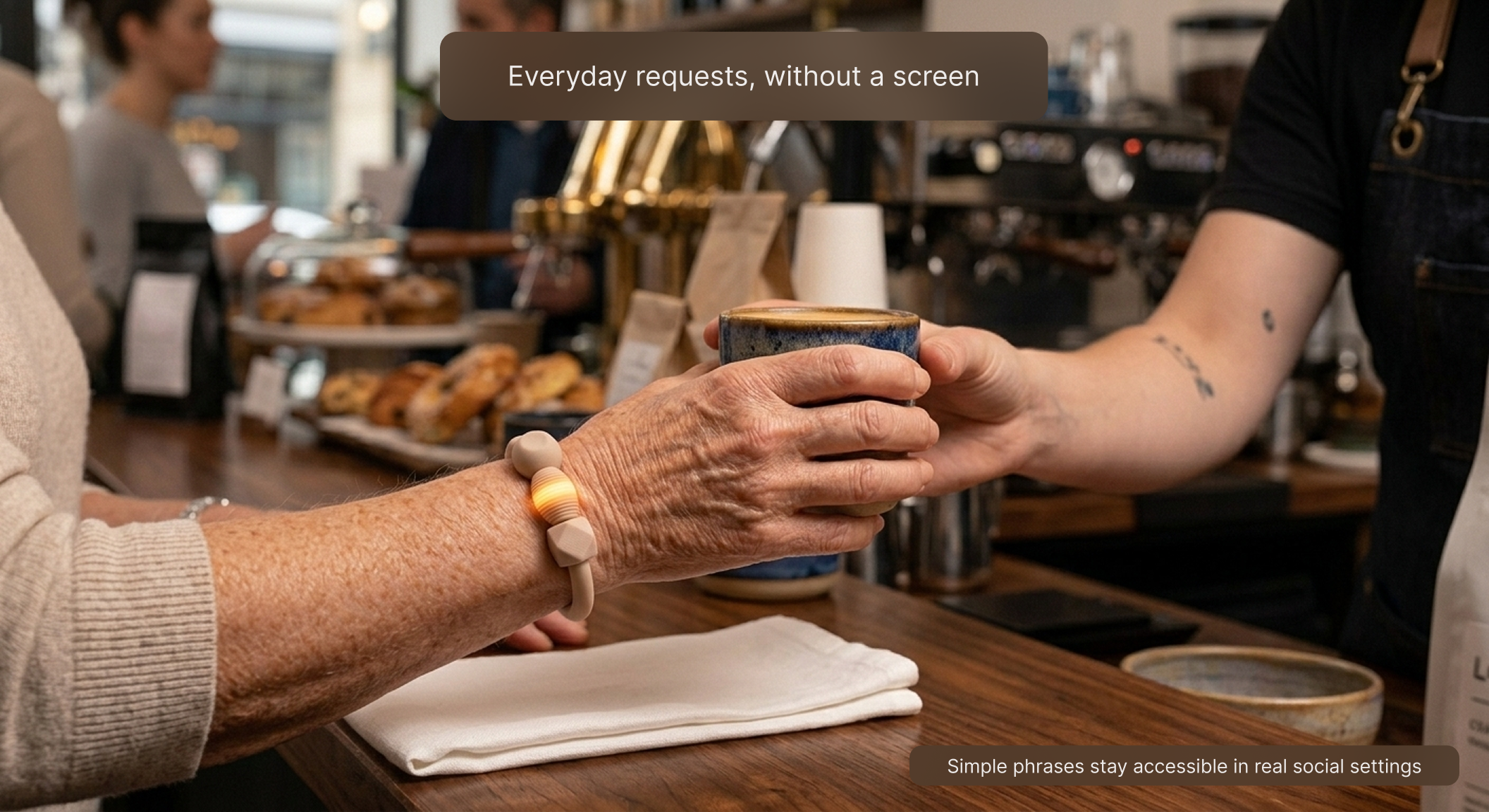
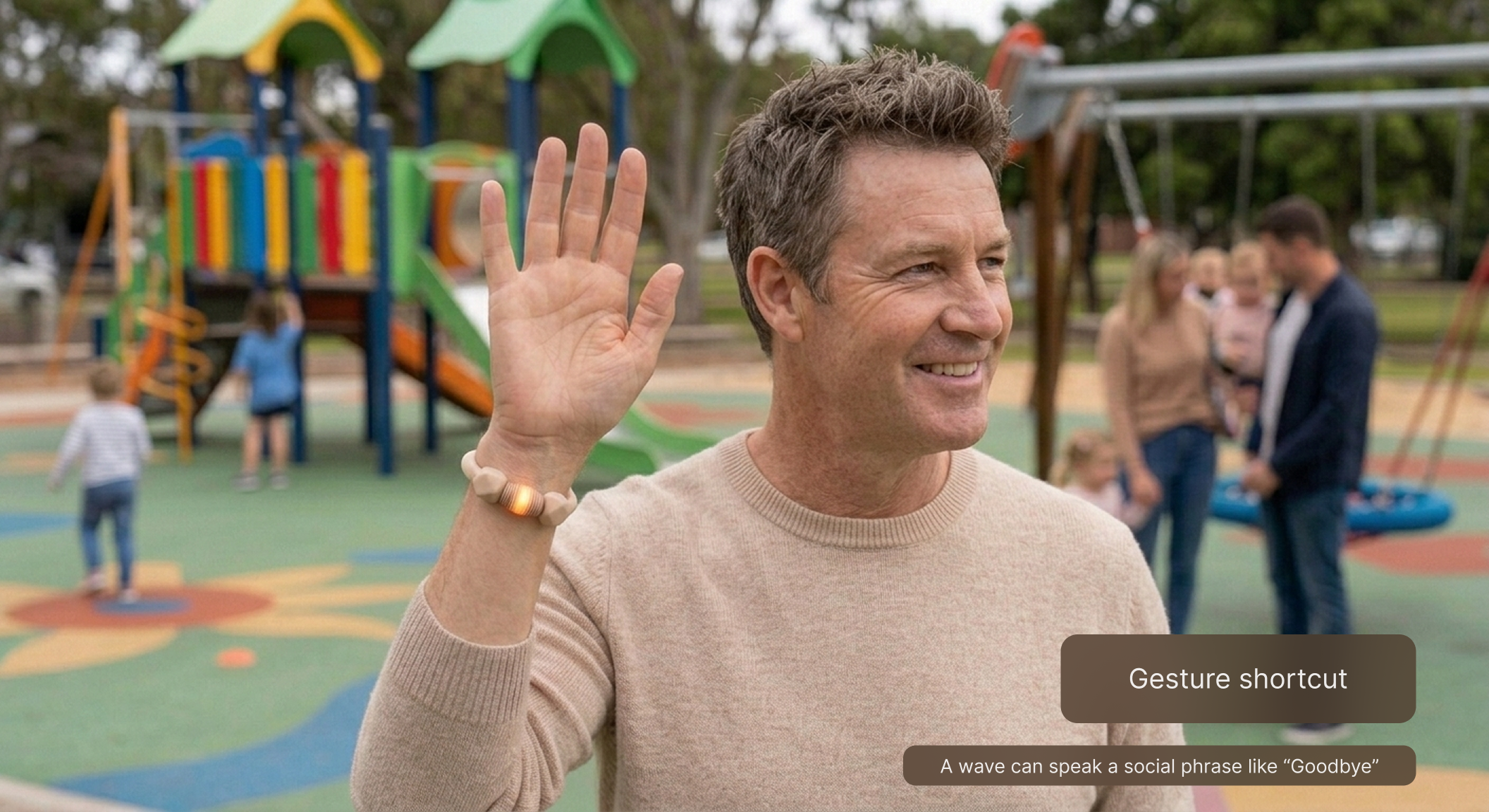
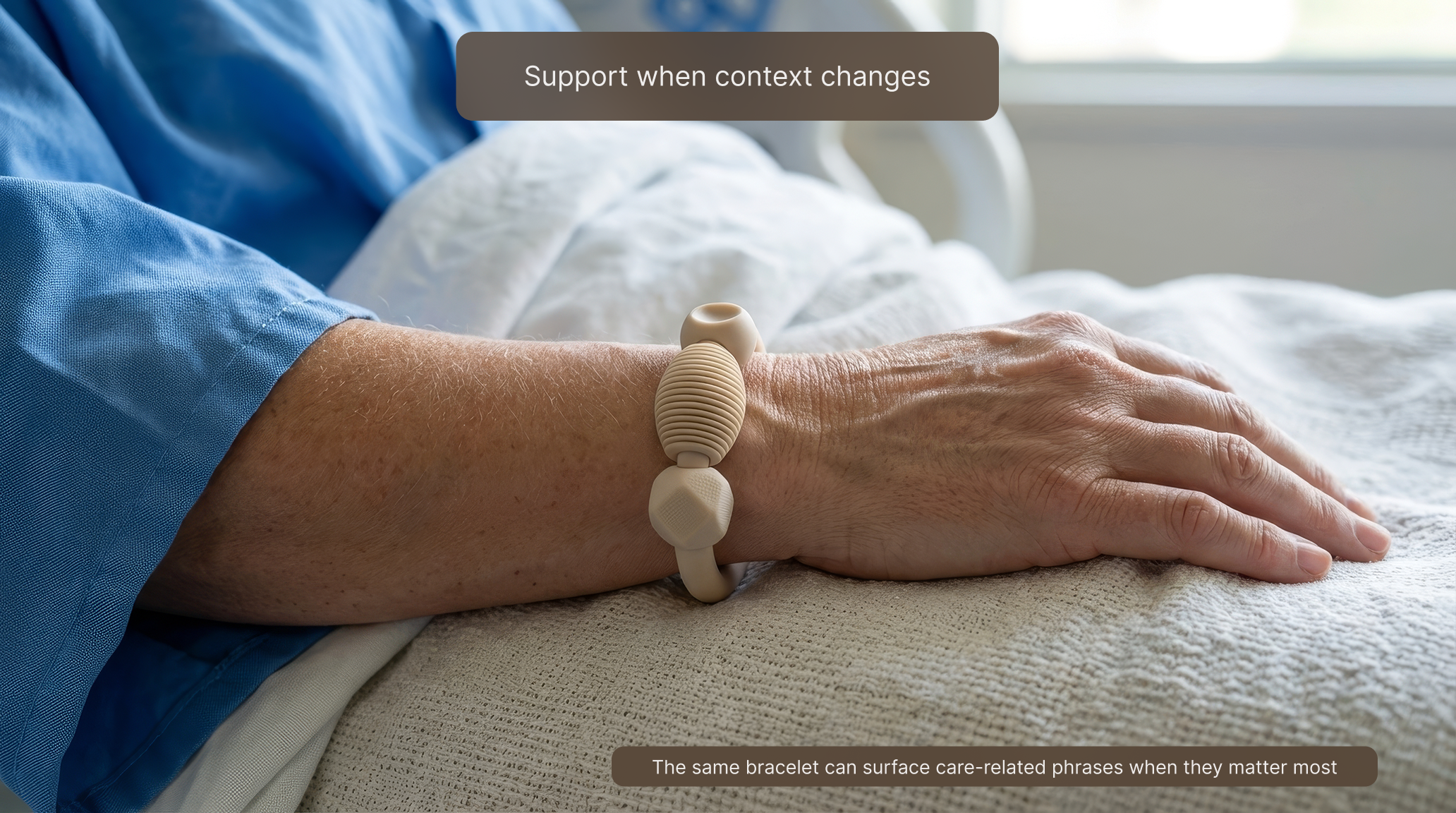
The bracelet replaces central displays with three distinct tactile beads, each representing a stable phrase family. A smooth concave bead maps to social/emotional phrases, a ribbed elongated bead to daily needs, and a faceted dotted bead to health/care requests. Each bead’s unique geometry allows eyes-free identification. Simple gestures—single press, double press, and swipe—make nine high-frequency phrases immediately accessible. Haptic feedback and a subtle light ring confirm selections before they are spoken, reducing accidental activation. This approach leverages interaction research showing that tactile cues support faster, more learnable non-visual use, reducing the cognitive load on the wearer.
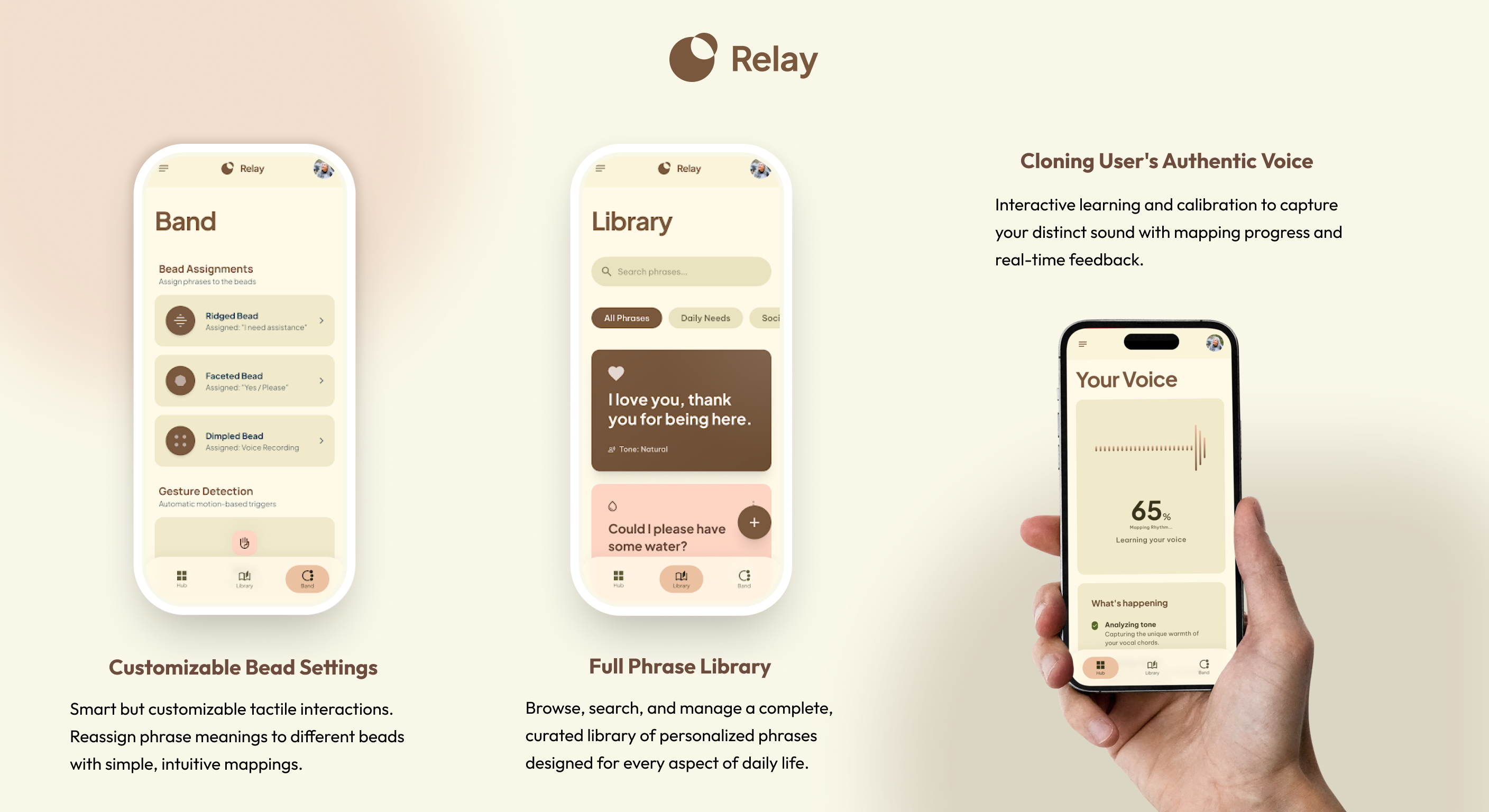
Relay pairs with a companion app that reconstructs a familiar voice from past recordings, organizes phrase libraries, and syncs custom sets to the bracelet. The app enables context-aware switching; for example, it may prioritize domestic needs at home while surfacing medical requests in clinical settings. This direction aligns with research suggesting that location-aware systems reduce the burden of navigating large vocabularies. The design is intentionally personal rather than clinical, utilizing soft matte materials and warm neutral tones to ensure the user remains socially present. Feasibility is grounded in existing technologies: capacitive sensing, low-power Bluetooth, compact haptics, and micro-speakers. This modular architecture also supports sustainable manufacturing through repairable electronics and bio-based elastomers. Relay ultimately demonstrates that assistive technology can be technically plausible, emotionally dignified, and exceptionally intuitive, ensuring communication remains a humane and seamless experience for those who need it most.

Credits

Entrant
Volkswagen (Anhui) Digital Sales and Services Company Limited
Category
Vehicle Accessories - Accessories
Country / Region
China

Entrant
Gresland-Benc Technology (Foshan) Co., Ltd.
Category
Bathroom & Sanitary Equipment - Toilets / Accessories
Country / Region
China

Entrant
Dell Technologies
Category
Computer & Information Technology - Monitors
Country / Region
United States