Zou Yuanhua
1. Congratulations on winning the NY Product Design Awards! Can you introduce yourself and share about what inspired you to pursue design as a career?
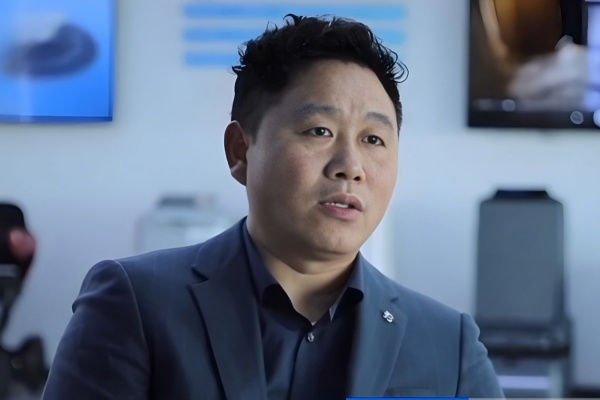
I’m Zou Yuanhua, Chairman of Shenzhen Wandechang Innovative Intelligence Co., Ltd. I started my career in precision mold design. After years in the industrial sector, I realized that “good design can make technology serve people with more warmth”.
Later, seeing the elderly’s demand for convenient and considerate services in the health and elderly care field, I wanted to combine design and technology to create products that truly solve practical problems.
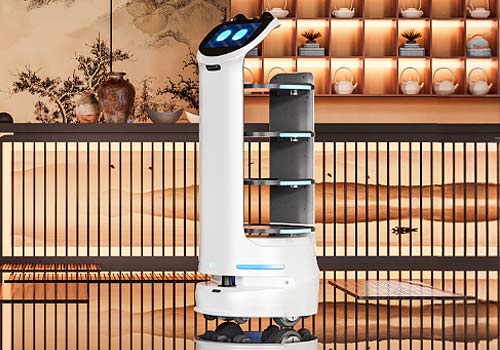
For example, the award-winning “Xiong Da” meal delivery robot aims to make elderly care services more efficient and warm, which also makes me more determined to pursue design in this direction.
2. What does being recognized in the NY Product Design Awards mean to you?
For me and my team, this award is not just an honor, but a kind of "two-way recognition". On one hand, it affirms our efforts in combining industrial technology with elderly care scenarios and creating warm designs (like the "Xiong Da" robot).
On the other hand, it also proves that the direction of "using technology to make elderly care services more efficient and considerate" is correct. It will also inspire us to continue optimizing products and promoting such elderly care robots to more places, so that more elderly people can enjoy convenience.
3. How has this achievement impacted your career, team, or agency, and what opportunities has it brought so far?
For the team, everyone is more motivated—our efforts in developing “Xiong Da” are recognized, so we feel more confident in innovation. For the company, with higher visibility, many elderly care institutions take the initiative to cooperate with us, and investors also pay more attention to us.
In terms of opportunities, overseas elderly care enterprises from Europe and Japan have come to discuss introducing “Xiong Da”; domestically, more local governments support us in expanding production and building smarter R&D bases.
4. What role does experimentation play in your creative process? Can you share an example?
Experimentation is a key step for "trial and error + optimization" in our creative process, helping turn ideas into reality. Take the facial interaction design of "Xiong Da" as an example. At first, we wanted to make the robot's expressions more vivid but feared the elderly might find it "strange".
So we ran an experiment in a Shenzhen nursing home, installing different versions of the expression system to observe reactions—some versions had overly exaggerated expressions, making the elderly reluctant to approach; later, we adjusted to a milder version closer to real human micro-expressions, and the elderly were willing to greet "Xiong Da" actively.
Also, for delivery stability, we repeatedly tested the robot's ability to cross thresholds and avoid obstacles in a simulated nursing home site, revising the algorithm 5 times until it could deliver meals steadily without spilling soup.
5. What's the most unusual source of inspiration you've ever drawn from for a project?
Once, I visited a nursing home and saw caregivers using old-fashioned insulated buckets to deliver meals. They kept food warm well, but the elderly felt "as cold as a tool". At the same time, I saw some elderly people showing particularly relaxed smiles to pet dogs.
A moment later, we wondered: Could we combine the "practicality of old insulated buckets (the warm sense of a container)" with "the companionable interaction of pets"? That's how we got the idea for "Xiong Da" — focusing on meal-delivery functions while designing friendly interactions. Looking back, it's really unusual to draw inspiration from old insulated buckets and pet interactions.
6. What’s one thing you wish more people understood about the design process?
I wish more people understood that design isn't just "coming up with a creative idea and then making it". Instead, it requires diving deep into real-life scenarios and polishing repeatedly.
Take our "Xiong Da" robot as an example. Just to make it deliver meals stably in nursing homes and interact well with the elderly, we tested it in different nursing homes for nearly a year and adjusted countless details—from the speed of the robot's speech to the obstacle-avoidance algorithm.
Design is a cycle of "deriving from scenarios and then going back to scenarios to optimize", not something that can be done in one go.
7. How do you navigate the balance between meeting client expectations and staying true to your ideas?
The key to balance is first grasping clients’ real needs, then matching them with professional design. For example, when a client said "let the robot deliver more meals", we found they actually wanted to solve the caregivers’ low efficiency.
So instead of forcing more capacity, we created an intelligent scheduling system for staggered delivery and adjusted the meal compartment to fit the elderly better, and clients were satisfied without our design being compromised.
8. What were the challenges you faced while working on your award-winning design, and how did you overcome them?
There were two main challenges. First, the difficulty of scene adaptation—nursing homes have many thresholds and carpets, so the robot needed to deliver meals stably and flexibly. We repeatedly tested in simulated environments and revised the motion algorithm 5 times until it could smoothly navigate various obstacles.
Second, the difficulty of emotional interaction—we were worried the robot would feel too "mechanical" for the elderly to approach. So we talked with and observed seniors in nursing homes, adjusting the robot's expressions to gentle micro-animations and slowing down its speech speed by 30%. Gradually, the elderly became willing to interact with it.
9. How do you recharge your creativity when you hit a creative block?
I don’t force ideas in the office; instead, I go back to "the scene for answers". When hitting a block, I spend half a day in nursing homes—talking to seniors, watching caregivers work.
Once, I saw a caregiver cool down meals before giving them to an elderly person, and that suddenly sparked the idea of adding a "temperature reminder" function to the robot. Rooting in real needs helps me recharge my creativity better than overthinking.
10. What personal values or experiences do you infuse into your designs?
I infuse two core values into my designs: "pragmatism" and "empathy". My early experience in precision mold work taught me that "design must solve real problems" without unnecessary frills.
Later, frequent visits to nursing homes, where I saw the elderly’s difficulties using things, made me develop the habit of "putting myself in their shoes"—for example, Xiong Da’s temperature reminder and slower speech were both designed with the thought: "What would my own elderly family need if they used this?" Pragmatism plus empathy forms the foundation of my designs.
11. What is an advice that you would you give to aspiring designers aiming for success?
Don’t fixate on "creativity" and overthink. First, dive into the scenes you want to serve to find real problems—just like I often go to nursing homes to see how seniors eat and caregivers work; many design inspirations are hidden in these details. Also, don’t fear trial and error. It’s okay to revise an algorithm 5 times or adjust expressions ten times. Solving users’ troubles is the real success.
12. If you could collaborate with any designer, past or present, who would it be and why?
I would choose Dieter Rams. His concept that "good design always serves practicality" aligns perfectly with our original intention of making elderly care robots—he opposed unnecessary decorations and advocated "design doesn’t show off, but only solves problems," which is exactly what Xiong Da needs: for example, the elderly use the robot for simplicity and reliability, not complicated operations.
I also want to discuss with him how to better balance "stable functionality" and "human warmth," such as simplifying operation steps further and making the body more durable to better suit the elderly’s long-term use.
13. What's one question you wish people would ask you about your work, and what's your answer?
I really hope someone would ask: "When designing Xiong Da, was there a seemingly trivial detail that took you a lot of effort?"
In fact, there was a non-slip design on the meal tray. At first, we used ordinary non-slip pads, but later we found that the elderly might accidentally knock the tray askew when picking up meals, causing soup to spill.
So we went to nursing homes to record the elderly’s hand gestures and strength when taking meals, tested 8 types of non-slip materials, and finally made the tray edge slightly tilted at 15 degrees, plus added silicone bumps at the bottom.
The spill rate dropped by 90% immediately. Many people think this is a small thing, but for the elderly, not spilling soup and being able to eat safely is the most practical convenience. The "small things" in design are actually "big things" for the elderly.