Michael Goldberg
1. Congratulations on winning the NY Product Design Awards! Can you introduce yourself and share about what inspired you to pursue design as a career?
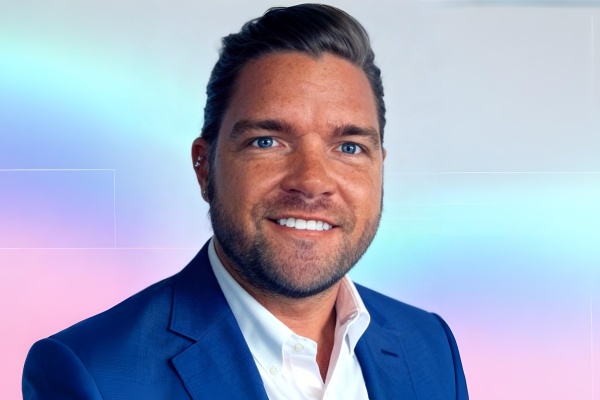
Thank you. My name is Michael Thomas Goldberg, and I’m the Co-Founder and Lead Designer of PANDA Robotics USA. My journey into design began with an obsession for how things work — the mechanical rhythm of industry, the quiet beauty of precision, and the belief that design has the power to humanize technology.
What inspired me wasn’t a single moment, but a lifelong fascination with building things that matter — machines that not only perform, but inspire. I see design as the bridge between engineering and emotion — where logic meets art.
2. What does being recognized in the NY Product Design Awards mean to you?
This award represents far more than a trophy — it’s validation that industrial design deserves a seat at the creative table. To be recognized among world-class innovators tells me that our vision — to make automation beautiful, approachable, and intelligent — resonates beyond manufacturing.
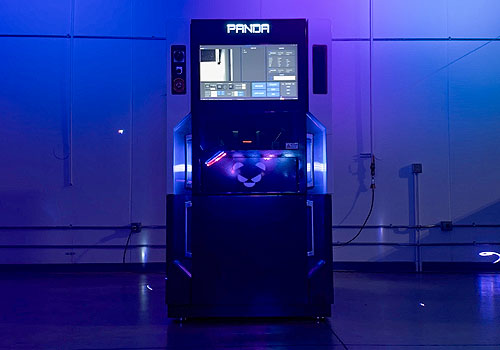
It’s also a deeply personal honor. Every line, panel, and surface of the PANDA-460 carries our team’s fingerprint. Winning this award means the world saw that same spark we poured into every detail.
3. How has this achievement impacted your career, team, or agency, and what opportunities has it brought so far?
It’s ignited pride across our entire organization. Engineers, designers, and builders now feel part of something bigger than machinery — a movement redefining how automation should look and feel.
This recognition has opened doors to new collaborations, expanded our presence internationally, and inspired the next generation of designers within our company to dream boldly. It’s proof that great design has commercial power — not just aesthetic value.
4. What role does experimentation play in your creative process? Can you share an example?
Experimentation is everything. Without it, design becomes predictable — and predictability kills progress.
When developing the PANDA-460, we challenged traditional machine form. We asked: What if an industrial workcell could express calm confidence instead of intimidation? We re-engineered the motion paths, lighting, and control interface to create something that felt as sophisticated as it was powerful. That willingness to break patterns led us to something truly new.
5. What's the most unusual source of inspiration you've ever drawn from for a project?
Honestly — nature. The symmetry of a dragonfly’s wings, the flow of water, even the posture of a predator before it strikes — all of these inform how I think about tension, balance, and energy in design.
The PANDA-460’s profile was partly inspired by the stance of a big cat — poised, deliberate, and precise. That sense of readiness and elegance translated beautifully into an industrial context.
6. What’s one thing you wish more people understood about the design process?
That design is not decoration — it’s decision-making with empathy. It’s not about making things look good, but making them work beautifully. Every curve, every interface choice has a reason. True design is invisible; you feel it long before you notice it.
7. How do you navigate the balance between meeting client expectations and staying true to your ideas?
I approach every project with respect for the client’s needs and for the integrity of the vision. When you build trust through communication, clients stop being obstacles and start being allies in creation.
The best outcomes happen when you educate through design, showing how creative intention actually solves the client’s functional problems better than compromise ever could.
8. What were the challenges you faced while working on your award-winning design, and how did you overcome them?
The biggest challenge was balance — combining industrial strength with visual grace. We wanted a machine that engineers respected and operators loved.
To achieve that, we obsessed over proportions, door mechanics, lighting tone, and user ergonomics until every interaction felt natural. We overcame constraints not by cutting corners, but by rethinking them entirely.
9. How do you recharge your creativity when you hit a creative block?
I step away from the computer and return to real life — time with my children, time outdoors, time to observe things that have nothing to do with robotics. Creativity often hides in the ordinary; you just need to look up from the blueprint long enough to see it.
10. What personal values or experiences do you infuse into your designs?
Integrity, curiosity, and purpose. I design with the same mindset I raise my children — to build something that lasts, contributes, and reflects love in its craftsmanship. Every product should serve, not just impress.
11. What is an advice that you would you give to aspiring designers aiming for success?
Never design for applause — design for impact.
Fall in love with the process, not the praise. Learn the rules, then have the courage to rewrite them. The world doesn’t need more copies — it needs originals who care deeply about why they create.
12. If you could collaborate with any designer, past or present, who would it be and why?
I would choose Sir James Dyson. His relentless curiosity and refusal to accept limitations have always inspired me. Dyson embodies the kind of innovation that begins with frustration and ends with revolution — transforming everyday challenges into elegant solutions through persistence and bold engineering.
I deeply admire how he bridges form and function without compromise — proving that industrial design can be intelligent, efficient, and artful all at once. Collaborating with someone like Dyson wouldn’t just be about product development; it would be a masterclass in vision, perseverance, and the courage to build something the world hasn’t yet imagined.
13. What's one question you wish people would ask you about your work, and what's your answer?
“What emotion do you want people to feel when they see your machines?”
My answer: Pride. I want operators, engineers, and business owners alike to look at our machines and feel proud — proud of their craft, proud of their factory, proud of what human ingenuity can build when design and engineering move as one.