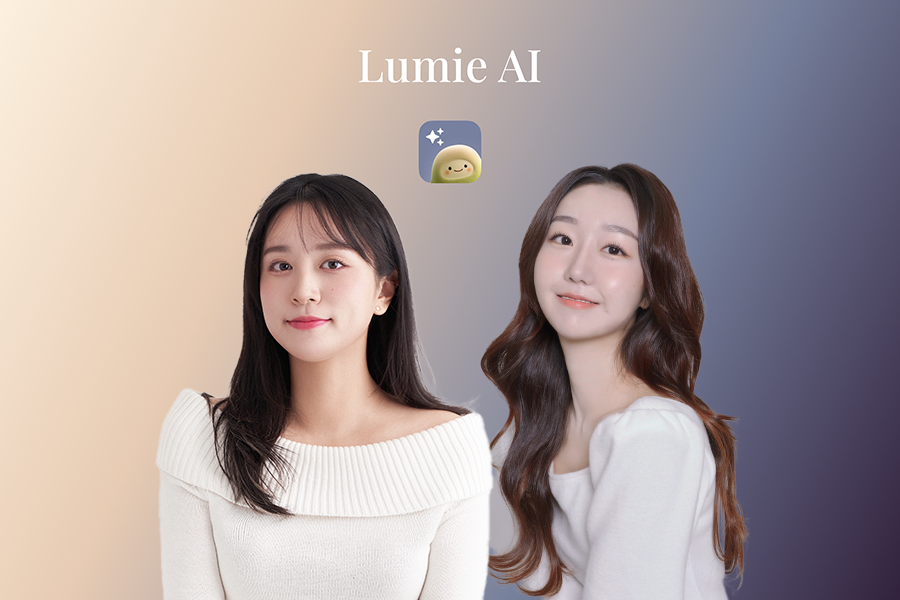
Hwang Sooyeon & Kim Jooyeon
1. Congratulations on winning the NY Product Design Awards! Can you introduce yourself and share about what inspired you to pursue design as a career?
Sooyeon: I’m Soo, a product designer working at the intersection of AI and people. What inspires me is this ability to make something complex feel human, kind, and intuitive. That’s why I pursued design: to express empathy in a way that is actually helpful for people.
Jooyeon: Hello, I’m Jenny, an Experience Designer in the game industry, passionate about crafting user-centered experiences that connect empathy with purpose. I was drawn to design for its power to turn human needs into intuitive, meaningful products, balancing user and business perspectives to create experiences that are both enjoyable and impactful.
2. What does being recognized in the NY Product Design Awards mean to you?
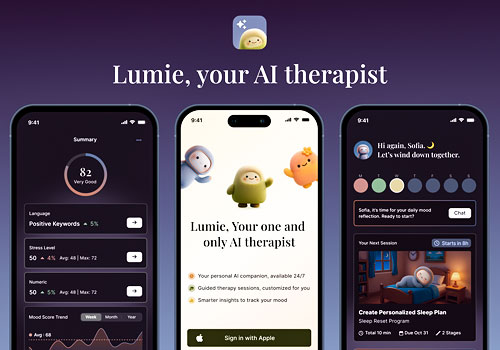
This recognition validates a belief we constantly hold: AI should feel human, not intimidating. Lumie was born because mental health support is still inaccessible for so many people. Being recognized encourages us to continue advancing our approach to AI and design standards forward.
3. How has this achievement impacted your career, team, or agency, and what opportunities has it brought so far?
It opened conversations with therapists, founders, clinical researchers, and potential partners, who never would have looked at a small design experiment otherwise. Stakeholders take the product vision more seriously, and it gives our team momentum to invest more deeply into responsible, trustworthy AI mental health design.
4. What role does experimentation play in your creative process? Can you share an example?
Experimentation is at the core of Lumie’s design, as mental health is a sensitive issue.
One example: we experimented with embedding therapy flows into a normal chat interaction without making it feel clinical or scripted. We co-designed with potential users to find the balance where techniques feel supportive, but not diagnostic or judgmental. We iterated dozens of times until the experience felt natural, safe, and emotionally honest.
5. What's the most unusual source of inspiration you've ever drawn from for a project?
For Lumie, we pulled a surprising amount of inspiration from non-mental-health apps: health tech, journaling, and self-reflection apps. We studied how they talk to people during vulnerable emotional states, how they use tone, pacing, spacing, and microcopy. Sometimes, design knowledge lives outside the obvious category, and that cross-domain learning was essential.
6. What’s one thing you wish more people understood about the design process?
Structured thinking is necessary for good design. To elaborate more, information architecture, framing the problem space, mapping the emotional journey: if you start at the detail too fast, you get lost. If you zoom out first to the whole problem, then the design becomes intentional, not reactive.
7. How do you navigate the balance between meeting client expectations and staying true to your ideas?
We learned to anchor alignment on principle. If both sides agree on a shared principle, then we can debate solutions without losing trust. For Lumie, our north star principle was: never sacrifice user emotional safety for novelty. That principle helped us make decisions faster and more aligned.
8. What were the challenges you faced while working on your award-winning design, and how did you overcome them?
One of the biggest challenges was onboarding. We didn’t want the first-time experience to feel overwhelming or “clinical.” So we prototyped multiple flows, tested progressively disclosed information, and borrowed friendly microinteractions from consumer apps until the app felt like a gentle invitation, not a medical intake form.
9. How do you recharge your creativity when you hit a creative block?
Sooyeon: I walk out of the “design world” on purpose. Museums, antique shops, small bookstores, even IKEA showrooms. I get refueled by physical spaces and real materials. Also, honest conversations with other designers, hearing how they think, always re-spark my curiosity.
Jooyeon: Similar to Soo, I find inspiration outside the computer, visiting museums or art exhibitions. I also love crafting things by hand, like ceramics or making perfume, engaging all five senses.
10. What personal values or experiences do you infuse into your designs?
With Lumie specifically: Safety and trust come first. We designed Lumie to recognize when to support vs. when to escalate. AI should never pretend to be a human therapist. Responsible and transparent emotional support is not optional — it is the foundation.
11. What is an advice that you would you give to aspiring designers aiming for success?
Lead with empathy, validate what you hear, and probe deeper, your best solutions come from understanding the problem beneath the request.
12. If you could collaborate with any designer, past or present, who would it be and why?
We would love to collaborate with Dieter Rams for his timeless philosophy of “less, but better.” His approach to clarity and purpose deeply resonates with our belief in creating experiences that are simple yet emotionally meaningful. We admire how his work balances function and feeling, something we strive to achieve in every design.
13. What's one question you wish people would ask you about your work, and what's your answer?
We wish people would ask how we define a “meaningful” experience. To us, it’s when design goes beyond aesthetics, when it truly understands users, supports their goals, and creates an emotional connection while driving real impact for the business. That balance is what makes a product both loved and lasting.