Anurag Goyal
1. Congratulations on winning the NY Product Design Awards! Can you introduce yourself and share about what inspired you to pursue design as a career?
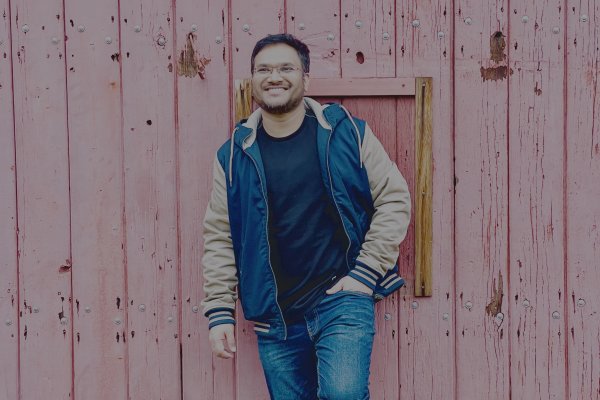
Hi, nice to meet you all. I’m an Interaction Designer currently leading UX initiatives at Google, where I focus on making complex data systems feel intuitive for millions of users. My path began in front-end development, but I quickly realized that while code builds the structure, design dictates the human experience.
I was inspired by the idea that a well-placed interface can solve 'invisible' problems—whether that’s helping a business owner understand their data or supporting a patient through a health crisis.
Being a designer has been a rewarding journey because I get to impact lives through my designs and the creation of novel interaction patterns. My goal has always been to bridge the gap between high-level technical capability and everyday human needs.
2. What does being recognized in the NY Product Design Awards mean to you?
It is deeply validating. Winning an award for two separate designs in such a competitive international arena is an immense challenge, which makes these honors even more compelling. In a field as fast-moving as product design, it’s easy to get lost in the day-to-day execution.
Being recognized by a jury of highly respected professionals who have distinguished themselves at the highest levels of the industry is a powerful reminder that the standards I push for—clarity, innovation, and user-centricity—are seen as world-class. To me, this isn't just a personal win; it’s a validation of the philosophy that design must be as functionally rigorous as it is aesthetically pleasing.
3. How has this achievement impacted your career, team, or agency, and what opportunities has it brought so far?
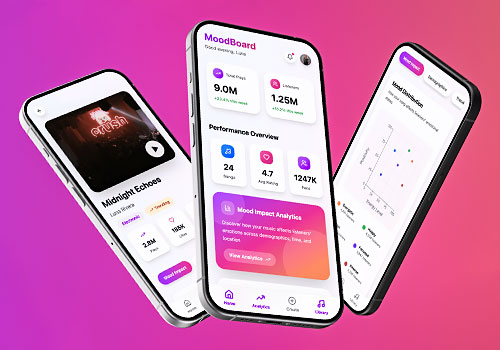
Winning for projects like MoodBoard Analytics has provided a vital platform to discuss the intersection of AI and deep personalization. Professionally, it reinforces my standing within the global design community and opens doors for higher-level discourse on how I use 'Agentic Orchestration' to solve complex information architecture problems. This is particularly relevant in domains like music and human impact, where data is often abstract.
This recognition serves as a benchmark for the industry regarding novel interaction patterns and how design can bridge the complex relationship between data and human emotion. It proves that my approach—solving systemic problems with intuitive, high-scale design solutions—is both viable and leading the field.
4. What role does experimentation play in your creative process? Can you share an example?
Experimentation is my primary tool for de-risking a product. I believe designers must 'fail fast' to learn and iterate even faster. In my experience, that is the only way to create a system that feels natural to the user while effectively solving their pain points.
For example, while developing MoodBoard Analytics, I moved beyond standard dashboard layouts to experiment with how AI could 'read' user intent to suggest visual styles. I tested diverse flows—allowing users to generate AI music and evaluate its emotional impact—which involved dozens of failed prototypes and usability tests.
This process helped me identify exactly where the AI felt helpful versus where it felt intrusive. Without that period of 'play' and deliberate failure, I wouldn't have arrived at a solution that feels truly personalized.
5. What's the most unusual source of inspiration you've ever drawn from for a project?
I often look to gardening—specifically the challenge of cultivating fruit-bearing plants in limited containers. It is a masterclass in 'constrained optimization.' You have a very specific set of variables—soil pH, sunlight, container depth—and you must produce a high-quality result within those strict boundaries.
Design operates on the same principle; I am rarely working with a blank slate. I am constantly navigating technical constraints, business goals, and user limitations. Learning how to make something thrive in a 'small pot' has directly informed how I build resilient, scalable features within the complex ecosystems I've managed throughout my career.
6. What’s one thing you wish more people understood about the design process?
I wish more people understood that design is a constant process of 'negotiation' and 'decision-making,' not just a 'drawing' process. Many still perceive UX designers as 'pixel pushers' focused solely on aesthetics, but our role is far more strategic.
For every pixel a user ultimately sees, I likely discarded 50 previous versions because they failed to meet a specific functional or psychological need. Good design is about the thousands of 'No's' that lead to the one perfect 'Yes.' It is a deeply analytical discipline disguised as a visual one.
7. How do you navigate the balance between meeting client expectations and staying true to your ideas?
I view the expectations of clients, business stakeholders, and cross-functional partners as the 'problem statement' and my ideas as the 'hypothesis.' I don't see them as being in conflict. As a lead designer, my role is to navigate the design process collaboratively; to be successful, you must be an effective collaborator rather than a 'lone wolf.' If a partner wants X, but I believe Y is better, I lead with data and research to demonstrate the 'Why.'
For example, when I designed LungTalk, I validated my concepts through rigorous user testing. This research was so foundational that it led to the publication of a formal Usability Protocol. When you frame ideas through the lens of user success and measurable impact, the 'balance' happens naturally because everyone is aligned on the same objective.
8. What were the challenges you faced while working on your award-winning design, and how did you overcome them?
The primary challenge with MoodBoard Analytics was the 'Cold Start' problem: delivering a personalized experience for a user the AI doesn't know yet. I also had to map the intricate relationship between human emotions and music, translating those nuances into a design solution where users could interpret data to make informed decisions for their audience. I had to design an onboarding flow that was data-rich enough to be useful, but streamlined enough to avoid user exhaustion.
Overcoming this required a deep dive into Information Architecture and Agentic workflows, ensuring the system could make 'intelligent guesses' that the user could then easily refine.
9. How do you recharge your creativity when you hit a creative block?
I step away from the screen entirely. Whether it's photography or cooking a new recipe, I find that engaging my hands in a different tactile medium allows my subconscious to keep working on the design problem. Often, the solution to a UX flow comes to me while I’m figuring out the timing for a meal or framing a shot through a camera lens. It’s about shifting the perspective.
10. What personal values or experiences do you infuse into your designs?
My background in front-end development and my professional journey from India to the UK and finally to Silicon Valley have given me a 'global-first' perspective. I am acutely aware that users come from vastly different linguistic, cultural, and technical backgrounds. This lived experience drives me to advocate for accessibility and 'universal design' in everything I create. I design for the person who is stressed, in a hurry, or navigating a device in their second language—because I have been that person.
11. What is an advice that you would you give to aspiring designers aiming for success?
Don't just learn the tools like Figma or AI; learn the people. The best designers are the best observers of human behavior. Also, in this new AI-driven era, do not be afraid of the technical side. My early experience in development is exactly what allows me to speak the language of engineers today. That technical literacy is essential for ensuring your high-level design ideas are actually built and shipped as intended.
12. If you could collaborate with any designer, past or present, who would it be and why?
I’ve had the privilege of working with many brilliant peers, and choosing one feels like an injustice to the rest. However, if I were to pick a historical figure, it would be Dieter Rams.
His 'Ten Principles for Good Design' are more relevant in the age of AI than they were in the 1970s. His focus on 'less, but better' is exactly what we need as we navigate the overwhelming information density of the digital age. I would love to see how he would apply his philosophy of functional simplicity to a complex LLM (Large Language Model) interface.
13. What's one question you wish people would ask you about your work, and what's your answer?
I want to further bridge the gap between Generative AI, deep personalization, and 'Intentional Design.'
Specifically, I’m focused on using AI not just to generate content, but to proactively resolve user friction before it even occurs. My goal is to continue leading projects that set the industry benchmark for how proactive value and user privacy can coexist in a helpful, human-centric way.