Ramesh Chandra Aditya Komperla
1. Congratulations on winning the NY Product Design Awards! Can you introduce yourself and share about what inspired you to pursue design as a career?
Thank you. I’m Ramesh Chandra Aditya Komperla, a senior software engineer and AI enthusiast with experience in building technology solutions in healthcare and insurance domains. Over the years, I’ve worked on systems that solve real-world problems, but I gradually realized that impactful innovation is not just about technology—it is about designing solutions that genuinely improve people’s lives.
My inspiration for pursuing design-driven innovation came from observing how mental health challenges, especially conditions like Bipolar disorder, often lack proactive and supportive technological solutions. Many existing tools only react after a crisis occurs, while I wanted to explore how AI, behavioral science, and human-centered design could work together to help individuals before escalation happens.
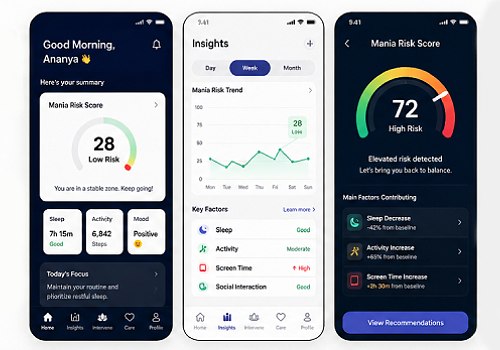
This vision led to the creation of ManiaBrake, an AI-powered early intervention system focused on predictive mental health stabilization. The project combines technology, empathy, and ethical design principles to create a more supportive and preventive approach to mental wellness.
For me, design is not only about aesthetics or interfaces—it is about understanding human behavior, reducing friction, and creating meaningful impact. Winning the Silver Award at the NY Product Design Awards is truly encouraging because it validates the importance of designing technology with empathy, responsibility, and social impact at its core.
2. What does being recognized in the NY Product Design Awards mean to you?
Receiving recognition in the NY Product Design Awards is both an honor and a meaningful validation of the vision behind ManiaBrake. This award represents more than professional achievement—it highlights the growing importance of human-centered and socially impactful design in technology.
ManiaBrake was created with the goal of exploring how AI and behavioral intelligence can be used not only to monitor mental health, but to proactively support stability and well-being. Being recognized by an international design platform reinforces the idea that innovation should combine technology, empathy, ethics, and real-world impact.
This recognition is especially meaningful because mental health challenges often remain underserved in product innovation. The award motivates me to continue developing solutions that can make technology more supportive, accessible, and preventive for individuals and families facing these challenges.
It is also encouraging to see design communities recognizing concepts that focus on social impact and proactive care. I hope this achievement helps inspire further innovation in AI-driven healthcare and mental wellness solutions.
3. How has this achievement impacted your career, team, or agency, and what opportunities has it brought so far?
Winning the NY Product Design Awards has been a very encouraging milestone in my professional journey. It has strengthened my confidence in pursuing innovation at the intersection of AI, healthcare, and human-centered design. The recognition has also validated the importance of building technology solutions that focus not only on functionality, but also on empathy, prevention, and real-world social impact.
From a career perspective, this achievement has expanded opportunities for collaboration and visibility within the design and technology communities. It has opened conversations around AI-driven mental health innovation, product design strategy, and the role of predictive technologies in improving quality of life. It has also motivated me to continue exploring research and product concepts that combine advanced AI capabilities with ethical and user-centered experiences.
For the project itself, the recognition has helped create greater credibility and awareness around the vision behind ManiaBrake. It has encouraged further interest in developing scalable mental wellness solutions that move beyond passive monitoring toward proactive support and stabilization.
Most importantly, this achievement reinforced an important lesson for me: impactful innovation happens when technology is designed with a clear understanding of human needs. That perspective will continue to guide my future work and projects.
4. What role does experimentation play in your creative process? Can you share an example?
Experimentation is a key part of my creative process because it helps transform ideas into meaningful, user-centered solutions. While developing ManiaBrake, I explored different combinations of AI prediction, wearable integration, and behavioral interventions to create a system that feels supportive rather than intrusive.
One important experiment was the “digital braking” concept, where the platform gently reduces stimulation through adaptive notifications and calming prompts before a manic escalation occurs. This iterative approach helped shape a more ethical, empathetic, and effective mental health experience.
5. What's the most unusual source of inspiration you've ever drawn from for a project?
One of the most unusual sources of inspiration for ManiaBrake came from automotive safety systems, particularly how modern vehicles use predictive braking and collision prevention technologies. I was fascinated by the idea that cars can detect risk early and intervene before an accident happens.
That concept inspired me to think about whether a similar “preventive braking” approach could be applied to mental health, where AI could recognize early behavioral warning signs and gently help stabilize a person before a manic escalation occurs. This cross-domain inspiration helped shape the core idea behind the “digital braking” mechanism in ManiaBrake.
6. What’s one thing you wish more people understood about the design process?
I wish more people understood that design is not only about aesthetics or visual appearance—it is fundamentally about solving real human problems. Good design requires empathy, research, experimentation, and continuous iteration to create experiences that are both meaningful and impactful. In many cases, the most challenging part of the design process is understanding user behavior and building solutions that feel natural, supportive, and trustworthy.
7. How do you navigate the balance between meeting client expectations and staying true to your ideas?
I listen deeply to the user, and I also listen to the purpose behind the design. Every concept passes through a “why” filter: why should this exist? When I design with clarity of purpose, user needs and my creative intent align. It becomes less about compromise and more about resonance.
8. What were the challenges you faced while working on your award-winning design, and how did you overcome them?
One of the biggest challenges while designing ManiaBrake was balancing advanced AI-driven intervention with user trust and emotional sensitivity. Mental health solutions can easily feel intrusive or overly controlling if not designed carefully. I wanted the system to feel supportive, calming, and empowering rather than restrictive.
Another challenge was designing a solution that could proactively predict behavioral changes using multiple signals such as sleep, activity, and digital behavior while still maintaining privacy and ethical transparency. I addressed these challenges through continuous experimentation, human-centered design principles, and by focusing on explainable AI and user-controlled interventions. This helped create a system that combines intelligent technology with empathy and trust.
9. How do you recharge your creativity when you hit a creative block?
When I face a creative block, I step away from the problem and explore ideas from different fields such as psychology, technology, or everyday life. Many of my best ideas come from connecting concepts from unrelated domains and observing real human behavior.
10. What personal values or experiences do you infuse into your designs?
I try to infuse empathy, responsibility, and human-centered thinking into my designs. I’m especially inspired by creating technology that can make a meaningful difference in people’s lives. My experiences working with AI and real-world healthcare challenges have taught me that the best innovations are not just intelligent—they should also feel supportive, ethical, and accessible to users.
11. What is an advice that you would you give to aspiring designers aiming for success?
Stay curious, keep experimenting, and focus on solving real human problems—not just creating visually appealing designs. The most impactful innovations come from empathy, persistence, and continuous learning.
12. If you could collaborate with any designer, past or present, who would it be and why?
If I had the opportunity, I would love to collaborate with my former manager, Will Foley. I admired his ability to combine strategic thinking, innovation, and strong leadership while keeping the focus on solving real user problems. Working with someone who values both technology and human-centered design would be incredibly inspiring and impactful.
13. What's one question you wish people would ask you about your work, and what's your answer?
How can technology become more emotionally supportive for humans?
My answer would be that technology should not only be intelligent and efficient, but also empathetic, ethical, and designed to genuinely improve human well-being. That belief strongly influenced the creation of ManiaBrake.