Yefan Liu
1. Congratulations on winning the NY Product Design Awards! Can you introduce yourself and share about what inspired you to pursue design as a career?
My name is Yefan Liu, and I work in industrial design and visual design, with a strong focus on user-centered and interdisciplinary design projects. For me, design is a way to connect people, technology, and real-life experiences. It goes beyond form-making—it is about shaping how people interact with everyday products and environments in meaningful ways.
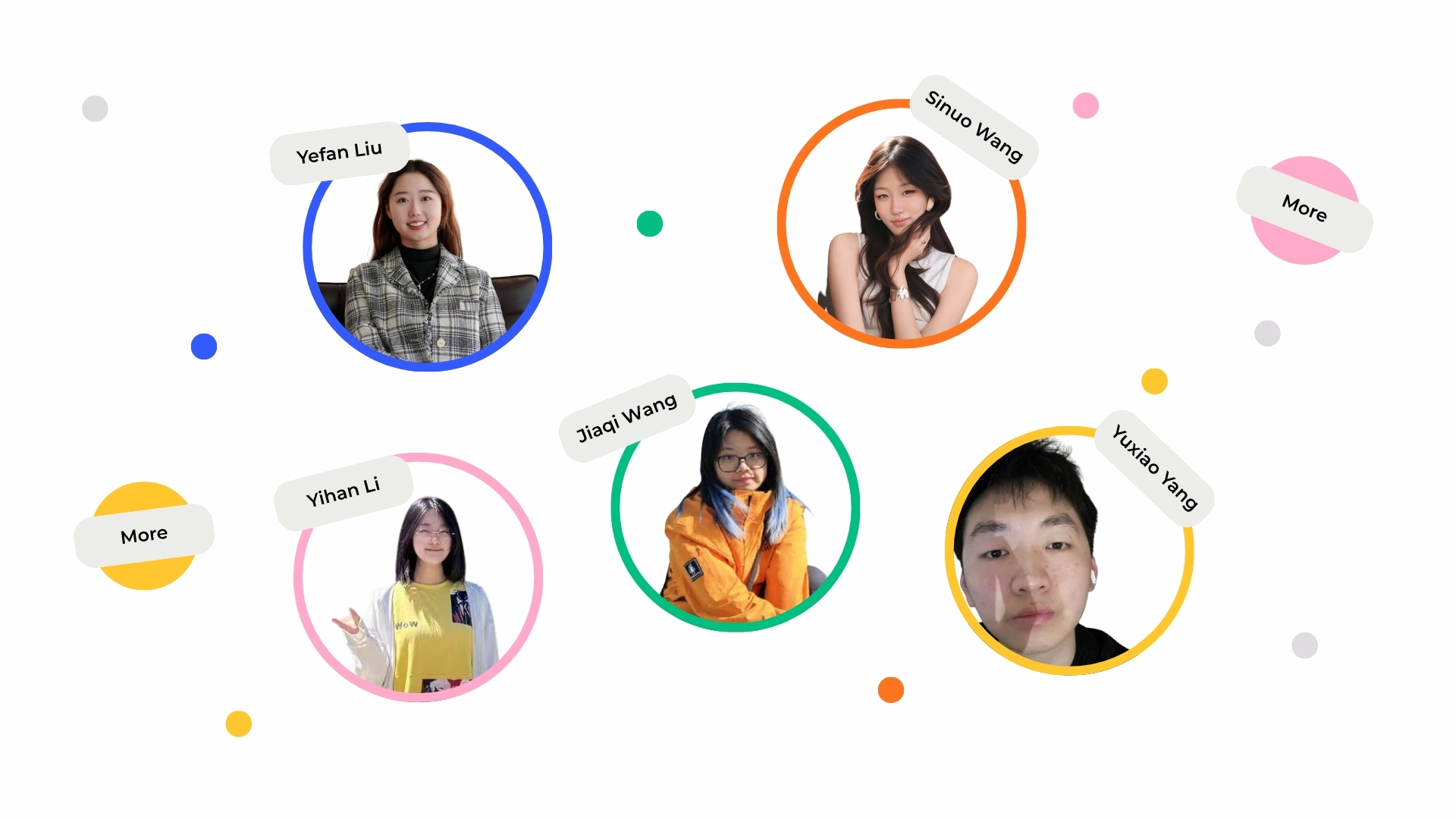
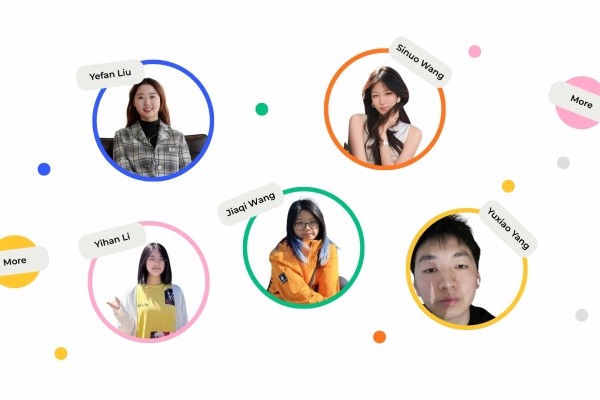
In this project, I also observed how each team member came into design from a different starting point, yet shared a common motivation. Yihan Li is drawn to design because of the satisfaction of turning ideas into tangible objects, especially the moment when a concept becomes something real and functional.
Jiaqi Wang comes from a visual design background and is passionate about expressing emotions and ideas through visual language, aiming to create work that feels alive and emotionally engaging.
Yuxiao Yang is interested in the transformation of abstract ideas into physical reality, finding value in the process of making thoughts visible and tangible. Sinuo Wang views design as a bridge between rational systems and human emotion. For her, design is not just problem-solving, but a way to make everyday life more thoughtful, gentle, and inclusive.
2. What does being recognized in the NY Product Design Awards mean to you?
This recognition is meaningful not only as a professional acknowledgment, but also as validation of our design direction.
For Yihan Li, it represents the first time her work has been recognized in a broader professional context, strengthening her confidence in continuing to pursue design. For Yuxiao Yang, the experience shifted his understanding of design—from simply creating outcomes to deeply considering the relationship between products and people.
For Jiaqi Wang, it was a valuable experience in collaboration, reinforcing the importance of teamwork and shared goals. For me, the most important takeaway is the confirmation that design rooted in real user needs can be recognized and appreciated within an international context.
3. How has this achievement impacted your career, team, or agency, and what opportunities has it brought so far?
This recognition has helped us shift our perspective from simply completing a project to understanding the long-term value of design thinking. Yihan Li noted that the award expanded her exposure and provided new opportunities for communication and learning.
Yuxiao Yang reflected that design is not only about visual expression, but also about human-centered thinking and social responsibility. Jiaqi Wang emphasized the importance of collaboration and the shared growth that comes from working closely as a team.
Overall, this experience has helped us better understand that design is not defined only by its outcome, but by the process of thinking, testing, and refining behind it.
4. What role does experimentation play in your creative process? Can you share an example?
Experimentation plays a critical role in our design process, especially when working on products grounded in real user needs. In this project, we also explored the use of AI-assisted tools to improve ideation efficiency and expand visual exploration during early concept development.
However, we quickly learned that tools alone are not enough. The real challenge lies in evaluating, filtering, and refining ideas based on user needs and practical constraints. Through continuous testing and iteration, we were able to gradually refine the design direction and move closer to a solution that truly fits the user context.
5. What's the most unusual source of inspiration you've ever drawn from for a project?
Inspiration often comes from everyday observation and discussion rather than predefined sources.
Yuxiao Yang mentioned that many ideas emerged naturally during conversations with peers or feedback exchanges with tutors. These spontaneous moments often led to unexpected creative directions.
Rather than searching for inspiration, we found that staying attentive to daily experiences and discussions was often more productive.
6. What’s one thing you wish more people understood about the design process?
I wish more people understood how much iteration happens behind a finished design.
What appears simple in the final result is usually the outcome of multiple rounds of refinement, rejection, and reconstruction. Even small adjustments can significantly affect usability and overall experience.
Yuxiao Yang also pointed out that in this project, the visual design went through numerous iterations, each one bringing the outcome closer to real-world usability and clarity. Design is never a single moment of inspiration—it is an ongoing process of refinement.
7. How do you navigate the balance between meeting client expectations and staying true to your ideas?
Our guiding principle is always to prioritize user needs. At the early stage of design, we focus on understanding real user behavior before introducing creative solutions.
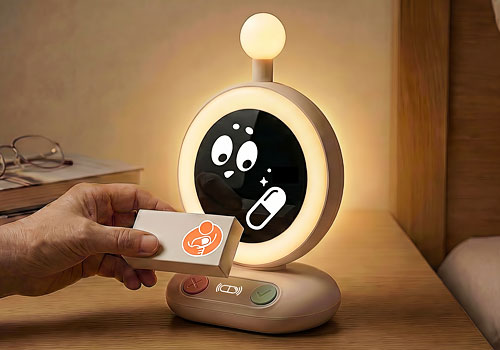
For example, in designing for elderly users, we initially explored multiple feature-rich concepts. However, user research revealed that complexity would create barriers. As a result, we simplified the system into essential functions with intuitive one-touch interactions.
Jiaqi Wang also emphasized that design requires continuous communication and negotiation to reach a balanced and meaningful solution.
8. What were the challenges you faced while working on your award-winning design, and how did you overcome them?
One of the main challenges was balancing functionality, usability, and visual expression within a single coherent design system. Early concepts often leaned toward complexity, which created usability issues, especially for the target users.
Through iterative testing and feedback, we simplified the interaction logic and refined the design into a clearer and more intuitive experience, such as reducing operations into a one-touch system.
At the same time, we continuously adjusted form, proportion, and visual language to ensure both clarity and aesthetic consistency.
9. How do you recharge your creativity when you hit a creative block?
When facing creative blocks, we usually step away from the design process rather than forcing ideas. Yuxiao Yang often uses AI tools or explores other design works to expand his thinking and generate new directions.
Jiaqi Wang prefers to reset by changing her environment, taking breaks, or observing other design approaches to regain clarity. Personally, I find that stepping back from structured thinking and reconnecting with everyday life is often the most effective way to recover creativity.
10. What personal values or experiences do you infuse into your designs?
I am naturally attentive to detail and highly sensitive to user experience, which strongly influences my design approach. I also believe design should carry social value, especially when addressing real-world problems and diverse user groups. My goal is to create solutions that are not only functional, but also considerate and human-centered.
Yuxiao Yang added that patience and attention to detail are essential qualities in refining design outcomes over time.
11. What is an advice that you would you give to aspiring designers aiming for success?
Do not rely too heavily on tools, but also do not reject them. AI and other design tools can significantly enhance efficiency, but they cannot replace critical thinking and design judgment. Most importantly, design should always remain grounded in real users and real needs. Without that foundation, even the most visually impressive design risks losing its meaning.
12. If you could collaborate with any designer, past or present, who would it be and why?
I would love to collaborate with designers such as Naoto Fukasawa or Kenya Hara. Their work consistently returns to everyday life and human behavior, often solving complex problems through extremely minimal and intuitive design approaches.
I am deeply interested in how they transform subtle observations of daily life into precise and meaningful design decisions, and I would like to learn from their way of thinking.
13. What's one question you wish people would ask you about your work, and what's your answer?
I wish people would ask: “What is the most important aspect of design?”
My answer would be: understanding people.
No matter how advanced the technology or how refined the aesthetics are, a design cannot be meaningful unless it truly responds to human needs, emotions, and behaviors. Great design is not always noticeable—it quietly improves how people interact with the world, making experiences more natural, more comfortable, and more human.