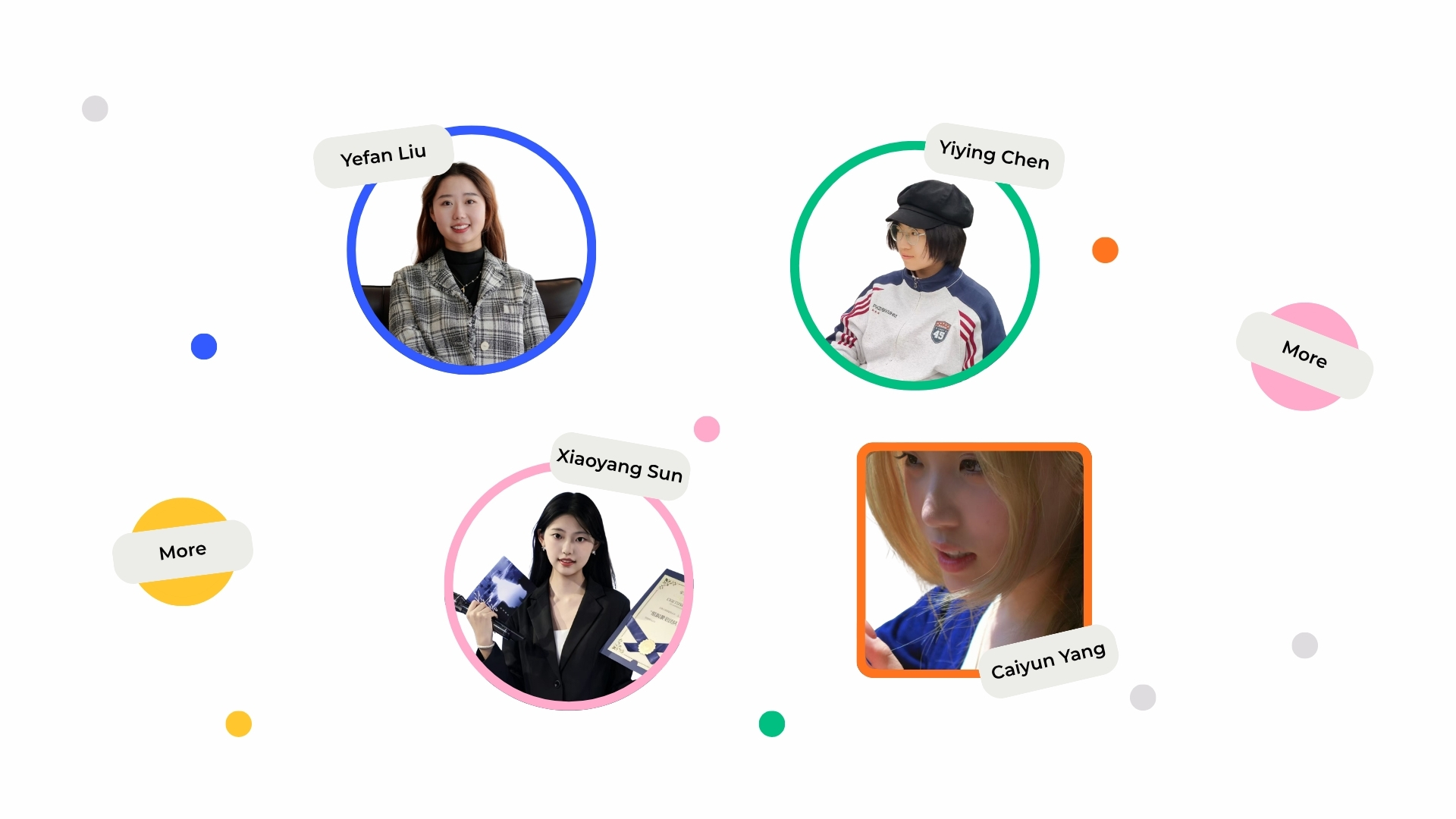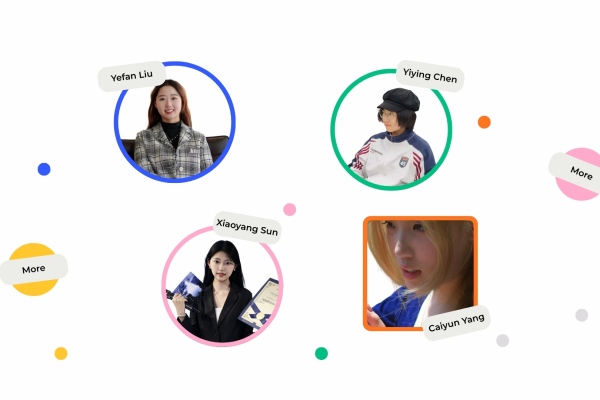
Yefan Liu & the HEALING YA Team
1. Congratulations on winning the NY Product Design Awards! Can you introduce yourself and share about what inspired you to pursue design as a career?
My name is Yefan Liu. I work across industrial design and visual design, with a strong focus on interdisciplinary design projects that combine material exploration, user experience, and product systems thinking.
This project began with a simple but important question:
How can protective wear provide not only physical shielding, but also emotional comfort for people undergoing sensitive medical treatments?
For me, design has always been about translating observation into solutions. It sits at the intersection of people, products, and lived experience—where aesthetics must serve function, and function must ultimately serve care.
Within the project, each collaborator approached design from a different perspective.
Shunxiao Yang is highly sensitive to everyday structures and materials, often starting from close observation of how objects behave in daily life.
Yiying Chen originally came from a fine arts background and gradually discovered that design is a form of “intentional creativity”—where visual language must also solve real-world problems.
These different perspectives shaped the foundation of the project.
2. What does being recognized in the NY Product Design Awards mean to you?
This recognition is meaningful not only as an award, but as a validation of our design direction. For Yiying Chen, it represents a confirmation that artistic sensitivity and design logic are not separate languages, but can reinforce one another when applied to real problems.
For Shunxiao Yang, it reflects international recognition of both the conceptual clarity and practical execution behind the work. For me, the most important meaning lies in affirmation:
that design grounded in real human needs can resonate beyond cultural and disciplinary boundaries.
3. How has this achievement impacted your career, team, or agency, and what opportunities has it brought so far?
This project has reshaped how we define design value. Throughout the process, Bowen Yao reflected on how design should not only solve functional problems, but also respond to emotional and experiential dimensions of care. Ziyun Yang emphasized that the most valuable outcome was not the final product itself, but the continuous process of negotiation between concept, material, and usability.
From my perspective, this project has strengthened our belief that meaningful design emerges from continuous dialogue between intention and reality. It has also opened up opportunities for further discussions within the design community, allowing us to revisit the project from multiple professional perspectives.
4. What role does experimentation play in your creative process? Can you share an example?
Experimentation is the core structure of this project. Given the sensitivity of the use case, we conducted extensive material and structural testing, including comparisons of comfort, stability, breathability, and wearability across different prototypes.
Shunxiao Yang and Xinyi Zhen made multiple rounds of physical prototyping, where each iteration helped us gradually move from conceptual form to functional validation. In this project, experimentation was not used to confirm a direction—it was used to discover it.
5. What's the most unusual source of inspiration you've ever drawn from for a project?
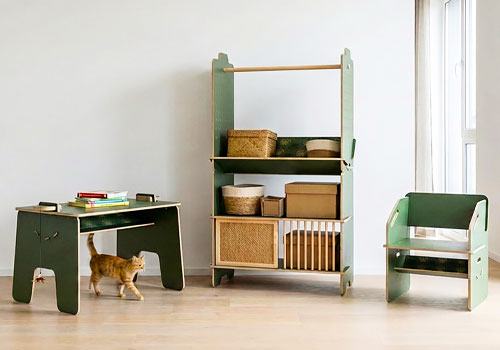
One unexpected reference came from a small observation shared by Yang Caiyun: a studio cat that often enters the workspace and naturally finds small spatial gaps to rest without disrupting human activity. This subtle coexistence between user and environment led us to reconsider ideas of comfort, boundaries, and shared space.
On a personal level, I often find that inspiration appears when I stop actively searching for it. Stepping away from the desk—whether through exhibitions, travel, or simply observing daily environments—creates space for new connections to emerge.
6. What’s one thing you wish more people understood about the design process?
I hope people understand that design is fundamentally a process of iteration. What appears as a finished product is only the final outcome of countless decisions, failures, and refinements. Many invisible layers—structural testing, material rejection, and usability adjustments—are what truly shape the final result. Design is not about a single moment of inspiration, but about sustained attention to real-world conditions.
7. How do you navigate the balance between meeting client expectations and staying true to your ideas?
In this project, decision-making was always guided by one principle: user-centered reasoning. Yang Caiyun emphasized that design decisions should emerge from synthesis rather than conflict—balancing user needs, team logic, and creative intent.
We relied heavily on prototyping and testing to evaluate assumptions. Rather than defending individual ideas, we focused on identifying what worked best in real use scenarios.
8. What were the challenges you faced while working on your award-winning design, and how did you overcome them?
The primary challenge was translating an abstract concept into a physically viable and usable product. Early-stage designs were highly conceptual, but testing revealed limitations in structure, material behavior, and real-world wearability.
We addressed these challenges by simplifying structural logic, breaking down complex assemblies, and iterating through multiple physical prototypes. Each iteration helped align design intention with functional reality.
9. How do you recharge your creativity when you hit a creative block?
When facing creative blocks, I avoid forcing solutions. Shunxiao Yang often shifts perspective through movement or observation of everyday objects, while Bowen Yao emphasizes stepping away from structured thinking to reconnect with real environments.
My own process is similar: I rely on observation, exhibitions, reading, and spatial experience to reset my thinking. Many meaningful ideas emerge only after disengaging from focused problem-solving.
10. What personal values or experiences do you infuse into your designs?
This project reflects a shared value across the team: design must remain grounded in lived experience. Shunxiao Yang brings attention to overlooked structural details. Yiying Chen contributes sensitivity toward visual and emotional expression. Yang Caiyun consistently centers user experience and contextual realism. For me, the guiding principle is balance—between aesthetics, function, and emotional resonance.
11. What is an advice that you would you give to aspiring designers aiming for success?
Start before you feel ready. Most design capability is developed through making, not planning. Equally important is staying connected to reality—materials, users, and context define the boundaries of meaningful design. Progress in design comes from iteration, not perfection.
12. If you could collaborate with any designer, past or present, who would it be and why?
I would choose to collaborate with Naoto Fukasawa. His work demonstrates a rare clarity: products that feel self-explanatory, almost inevitable in their form and function.
What I admire most is his ability to translate behavioral observation into design decisions that feel effortless. His approach represents a level of restraint and precision that is deeply aligned with this project’s philosophy.
13. What's one question you wish people would ask you about your work, and what's your answer?
I often wish people would ask: “What is the most invisible part of this project?”
My answer would be:
The most important part of design is not what is seen in the final object, but what happens before it—every failed iteration, every discarded assumption, and every decision that reshapes the direction of the work. That invisible process is where the real design lives.