Yizhen Chen
1. Congratulations on winning the NY Product Design Awards! Can you introduce yourself and share about what inspired you to pursue design as a career?
Thank you. My name is Yizhen Chen, and I am a product designer focused on enterprise UX, knowledge management, and digital workflow design.
I was inspired to pursue design because I care about making complex systems easier for people to understand and use. In enterprise software, users often work with large amounts of information, many business rules, and time-sensitive tasks. I found design meaningful because it gives me a way to turn that complexity into clearer, more structured experiences.
My work has increasingly centered on knowledge management and workplace productivity — especially how users create, evaluate, and improve business-critical content at scale.
2. What does being recognized in the NY Product Design Awards mean to you?
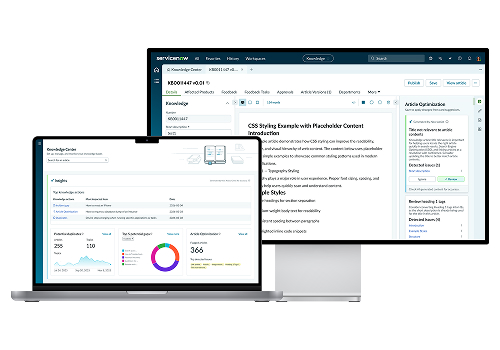
Being recognized by the NY Product Design Awards is meaningful because this project was designed for a very practical enterprise problem: helping users improve the quality of knowledge articles more efficiently.
To me, this award validates the importance of product design beyond surface-level visuals. The project required careful thinking around workflow, content hierarchy, recommendation clarity, and user trust. Receiving this recognition shows that enterprise tools can be both highly functional and thoughtfully designed.
It is also encouraging because the same Article Optimization project has received recognition from multiple international design programs, which reinforces the broader value of the work.
3. How has this achievement impacted your career, team, or agency, and what opportunities has it brought so far?
This achievement has helped strengthen my professional focus in enterprise product design, especially around knowledge management and content quality workflows.
For my team, the recognition highlights the value of cross-functional collaboration. The project involved close partnership across design, product, engineering, research, and leadership. The award helps make that work more visible and shows that complex enterprise experiences can be recognized by the broader design community.
For me personally, it has created more opportunities to share my perspective on designing scalable workplace experiences and to build a stronger professional narrative around product impact, workflow clarity, and enterprise UX.
4. What role does experimentation play in your creative process? Can you share an example?
Experimentation helps me move from a broad product idea to a clear user experience.
For Article Optimization, one major design question was how to present different content quality issues without making the experience feel overwhelming. I explored several structures for organizing guidance, including grouping by issue type, prioritizing what needed attention first, and designing clearer ways to explain why a recommendation mattered.
Through iteration, the experience became more focused and actionable. The goal was not just to show users a list of issues, but to help them understand what to improve and how to move forward with confidence.
5. What's the most unusual source of inspiration you've ever drawn from for a project?
One unusual source of inspiration is the way people edit and review documents in real life.
Before a document becomes final, people often mark it up, leave comments, circle issues, reorder sections, and create checklists. These small behaviors reveal how people naturally evaluate quality and make improvements.
For Article Optimization, that kind of thinking was helpful. The product experience needed to feel less like a separate inspection tool and more like a natural part of improving an article.
6. What’s one thing you wish more people understood about the design process?
I wish more people understood that product design is a decision-making process, not just a visual output.
In enterprise products, a small interface decision can affect workflow efficiency, user confidence, implementation feasibility, and long-term scalability. The final screen may look simple, but it often represents many rounds of tradeoffs and alignment.
Good design is not only about what users see. It is also about what the design helps users understand, decide, and accomplish.
7. How do you navigate the balance between meeting client expectations and staying true to your ideas?
I try to understand the expectation behind the request first. In enterprise design, a stakeholder may ask for a specific solution, but the underlying need may be about clarity, efficiency, compliance, scalability, or customer adoption.
Once I understand the real need, I can propose a design direction that supports both the business goal and the user experience. Staying true to my ideas does not mean ignoring constraints. It means protecting the core user value while being flexible about the path to get there.
8. What were the challenges you faced while working on your award-winning design, and how did you overcome them?
The main challenge was turning many types of article-quality signals into a clear and usable workflow.
Article Optimization needed to support different considerations, such as structure, accessibility, links, freshness, duplication, and other content quality issues. If all of these were presented at the same level, the experience could easily become noisy or difficult to act on.
To solve this, I focused on hierarchy and actionability. I considered how users would scan the information, understand priority, and decide what to fix next. I also worked closely with product and engineering partners to ensure the design was not only clear, but also realistic to implement.
The final direction aimed to make content improvement feel guided, organized, and integrated into the user’s existing workflow.
9. How do you recharge your creativity when you hit a creative block?
I usually step away from the interface and return to the problem.
Sometimes I sketch, walk, read, or look at examples from other systems. I also like reviewing the user journey again, because creative blocks often happen when the design becomes too focused on the screen instead of the user’s goal.
Once I reconnect with what the user is trying to accomplish, the design direction usually becomes clearer.
10. What personal values or experiences do you infuse into your designs?
I bring clarity, care, and practicality into my designs.
Clarity matters because enterprise users often work in complex environments. Care matters because even small moments of confusion can create friction when people are trying to complete important work. Practicality matters because a strong product experience must be useful, feasible, and scalable.
I want my designs to help people feel more confident in complex workflows, not more burdened by them.
11. What is an advice that you would you give to aspiring designers aiming for success?
Learn how to explain the reasoning behind your design.
Strong designers do not only create polished interfaces. They understand the problem, evaluate tradeoffs, communicate clearly, and connect their decisions to user and business impact.
I would also encourage young designers to build patience with complexity. Some of the most meaningful design problems are not solved by one beautiful screen. They require research, iteration, collaboration, and the ability to bring structure to ambiguity.
12. If you could collaborate with any designer, past or present, who would it be and why?
I would be interested in collaborating with Don Norman because his work has shaped how many designers think about usability, human-centered design, and the relationship between people and systems.
That perspective is especially relevant to enterprise product design. The challenge is not only to build powerful systems, but to make them understandable and useful for the people who rely on them every day.
13. What's one question you wish people would ask you about your work, and what's your answer?
I wish more people would ask: “How do you make content improvement feel actionable instead of overwhelming?”
My answer is that actionability comes from structure. Users need to know what needs attention, why it matters, and what they can do next. If guidance is too broad or disconnected from the workflow, it becomes noise.
In Article Optimization, my goal was to turn complex content quality signals into a clearer product experience. I wanted the design to help users improve knowledge articles with more confidence, while keeping the workflow organized and practical.