
Interface & User Experience
OceanLens
Entrant: Yiran Zheng, Zejun Wu, Yujia Ke
2026
Silver
A closer look
Project gallery.
Select a thumbnail to browse. Click the main image to enlarge.
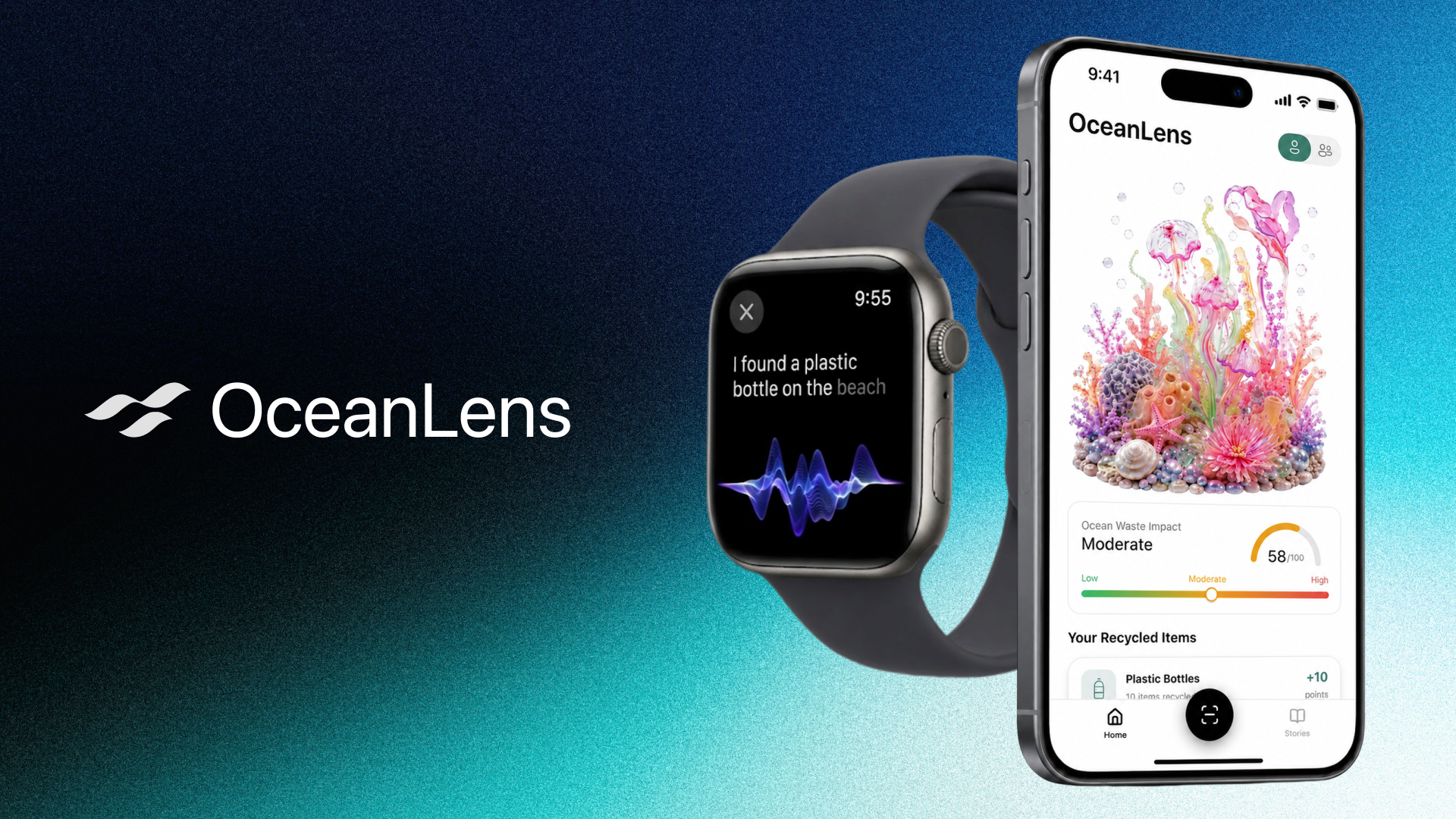
CategoryInterface & User Experience
Class / SubcategoryUser Experience (UX)
Product UX
Product UX
Country / Region United States
OceanLens is an AI-powered sustainability platform that transforms everyday encounters with ocean waste into meaningful environmental action. By combining AI waste recognition, recycling guidance, reporting tools, and gamified marine restoration, OceanLens helps people move from environmental awareness to sustained action.
Ocean pollution threatens marine ecosystems, wildlife, and human health, yet many people lack the knowledge, tools, or motivation to respond. OceanLens addresses this gap by reducing the friction between noticing waste and knowing what to do next. Users can scan ocean waste with their phone or Apple Watch, allowing AI to identify the object and material. The platform then provides accessible information about its environmental impact, decomposition timeline, and appropriate options for recycling, disposal, reuse, or reporting.
The experience is built around a continuous cycle: discover, understand, act, and restore. Users can safely collect waste and receive guidance for responsible disposal or recycling. When an item is too large or hazardous to remove, they can submit a report with its location for potential use by cleanup organizations or local departments. Completed actions earn Ocean Credits, making real-world environmental contributions visible within the digital experience.
Gamification creates an emotional connection that encourages continued participation. Users can adopt virtual marine life, nurture coral reefs, unlock new species, and visualize their ecosystem growing over time. A social feature allows users to view friends’ progress, helping individual actions feel more visible and connected to a larger community.
The Apple Watch serves as a lightweight field companion for quick reporting and guidance in outdoor, hands-free contexts. Through iterative prototyping, OceanLens also explored visual storytelling to make complex environmental topics, including microplastics, ocean-to-table impact, and decomposition timelines, more engaging and understandable.
Ultimately, OceanLens connects education, action, and emotional engagement to help transform passive observers into informed environmental stewards and build more sustainable behaviors over time.
Explore the project.
Project credits.
Yiran Zheng
Product Designer
Zejun Wu
Product Designer
Yujia Ke
Product Designer
Keep exploring
More winning perspectives.
2026 Silver Winner
MICHU CONTAINER CAT LITTE BOX
QINGHUA SILUO2026 Silver Winner
PLANTISM Avocado Nourishing Skincare Series
Guangzhou Zhimei Beauty Co., Ltd2026 Silver Winner
The Array Swing - Movement Meets Design
Street and Garden Furniture Co.Your work belongs in the conversation.
Begin Your Entry